

Obstructive Sleep Apnoea (OSA) is a condition where breathing is repeatedly interrupted during sleep due to a collapse of the upper airway.

Dr Maliha Siddiqui (DEN0001785009) Registered Dentist, General Registration
Understanding obstructive sleep apnoea
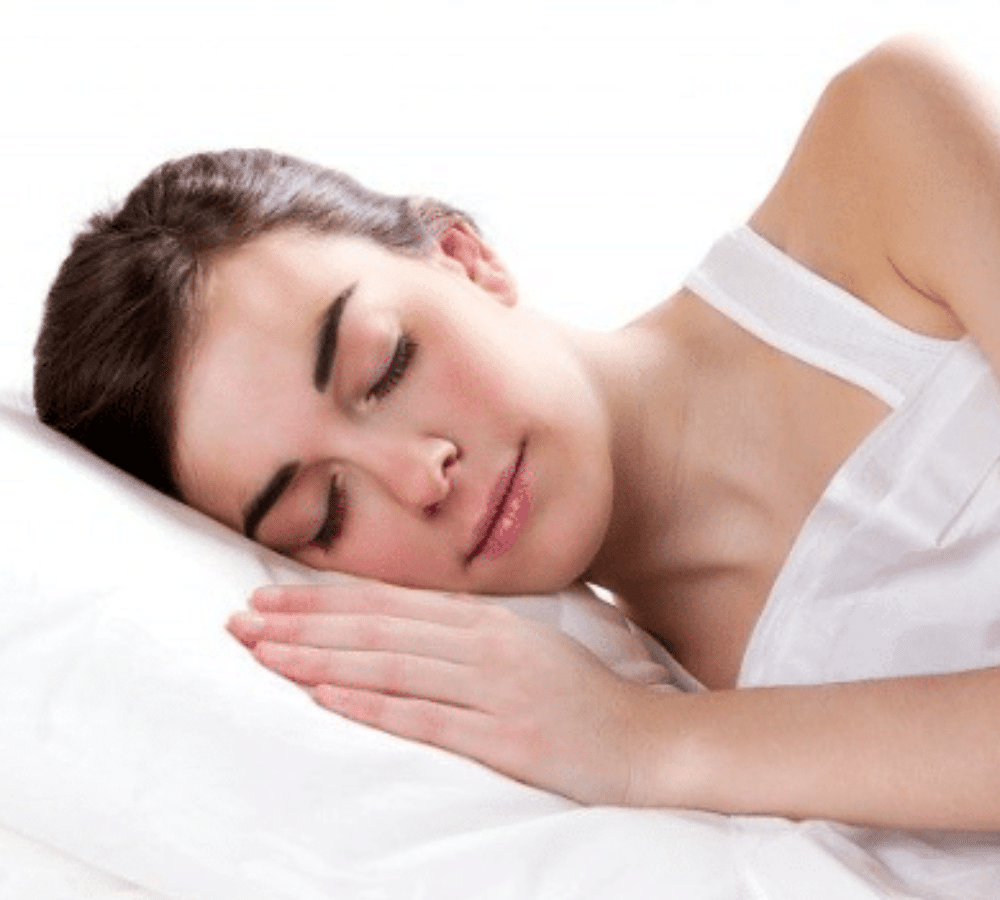
When we sleep, our muscles relax, including our through muscles. In some people the throat muscles can relax enough to cause the throat to close above the voice box causing a blockage (or obstruction). This can stop regular breathing, called an “apnoea”. This disease is called obstructive sleep apnoea (OSA).
OSA will cause a lack of restful sleep leaving the sufferer continuously tired and seriously impacting daily activities and lifestyle. Snoring can be both a precursor and a symptom OSA.
How is OSA diagnosed?
In order to achieve an accurate diagnosis for obstructive sleep apnoea, you will be required to undertake a sleep study. This involves the monitoring of your sleep and recording of your breathing, snoring, oxygen levels, brain and heart activity, body position, and body movements throughout a normal night’s sleep. Recent advances in technology mean that, in most cases, this study can be performed in the comfort of your own home. Severe cases may still require an overnight study in a hospital setting. The results of your sleep study are sent to a sleep physician who provides a report to your treating dentist. Out-of-pocket fee for the study is normally $200-$300.
Once your sleep study results are reviewed by your dentist and you are found to be a suitable candidate for treatment, we will begin the steps to design and fabricate your Mandibular Advancement Splint.
Obstructive sleep apnoea can increase your risk of:
- Irregular heartbeat
- Heart disease
- High blood pressure
- Stroke
- Heart attacks
- Reduced blood oxygen levels
You can decrease these risk factors by:
- Maintain a healthy body weight
- Avoid drinking alcohol
- Avoid smoking
- Seek treatment for allergies that affect airways
- Sleep on your side rather than on your back
Identifying the cause of your obstruction
Not all sleep apnoea is the same. For patients diagnosed with obstructive sleep apnoea, the next step isidentifying exactly where in the airway the obstruction is occurring. This is essential for selecting theright treatment.
At our Collins Street Imaging facility on Level 9, we use Cone Beam CT (CBCT) scanning to produce detailed three-dimensional images of your airway. Our specialist orofacial radiologists assess the CBCT to identify the precise point of airway constriction – whether at the level of the nose, soft palate, tongue base, or lower pharynx.
This targeted diagnosis means your treatment can be directed exactly where it is needed. Patients withnasal obstruction may benefit from ENT referral or nasal dilators. Patients with soft palate collapse maybenefit from Fotona laser treatment. Patients with a narrow arch and palate may benefit fromorthodontic expansion. Patients with structural jaw abnormalities may be referred to our oral andmaxillofacial surgeon.
This diagnostic-first approach ensures you receive the right treatment – not the most convenient one.
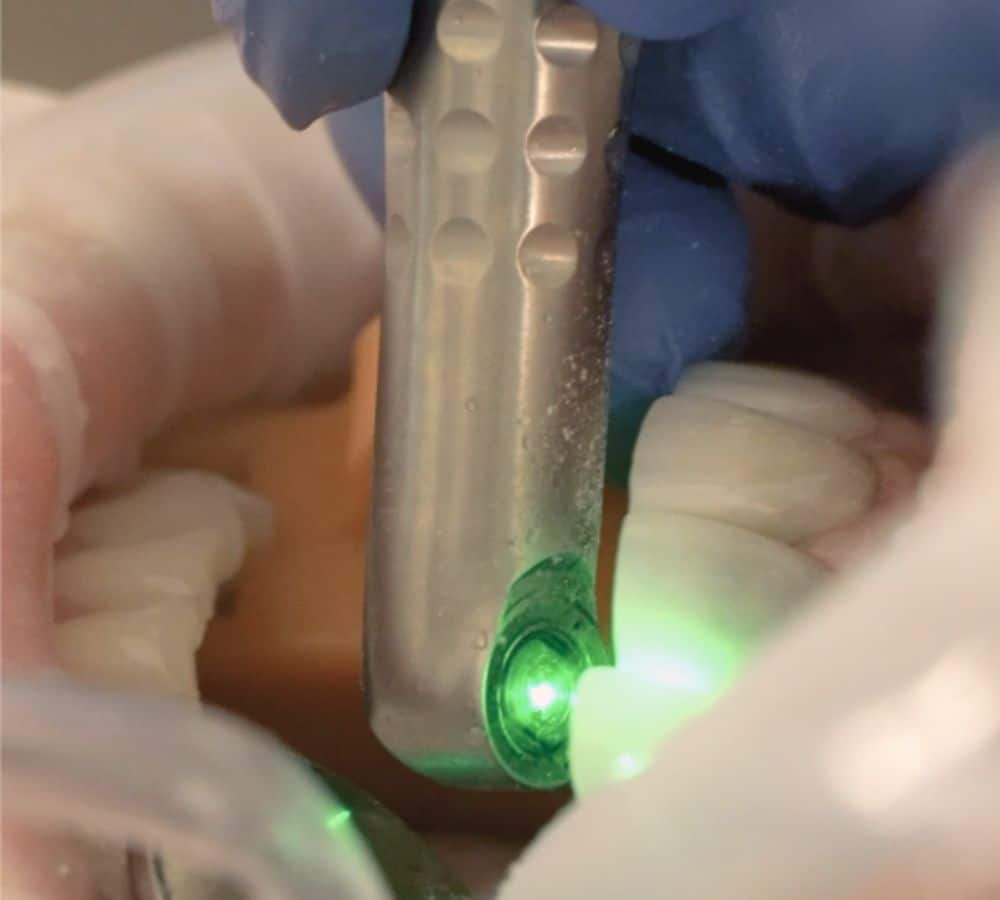
Laser dentistry to treat obstructive sleep apnoea
Laser therapy offers a non-invasive approach to treating sleep apnoea by reshaping the soft tissue in the throat, helping to widen the airway and reduce obstruction, which can improve breathing during sleep. It offers an alternative treatment to traditional CPAP machines or surgical interventions, offering potential benefits such as reduced snoring and improved quality of sleep.
Myofunctional therapy for snoring and sleep apnoea
The muscles of the tongue, throat, and face play a significant role in keeping the airway open during sleep. When these muscles are weak or poorly coordinated, the soft tissue of the throat is more likely to collapse and cause or worsen obstructive sleep apnoea and snoring.
At Smile Solutions, our orofacial myologist provides myofunctional therapy programs tailored to patients with sleep-disordered breathing. Treatment involves targeted exercises to strengthen the tongue, pharyngeal muscles, and the muscles of the lips and face – building the muscle tone needed to maintain an open airway through the night.
Myofunctional therapy is particularly effective for patients with mild to moderate sleep apnoea, habitual mouth breathers, and children with snoring or disrupted sleep. It is also used alongside mandibular advancement splint therapy and Fotona laser treatment as part of a comprehensive management plan.
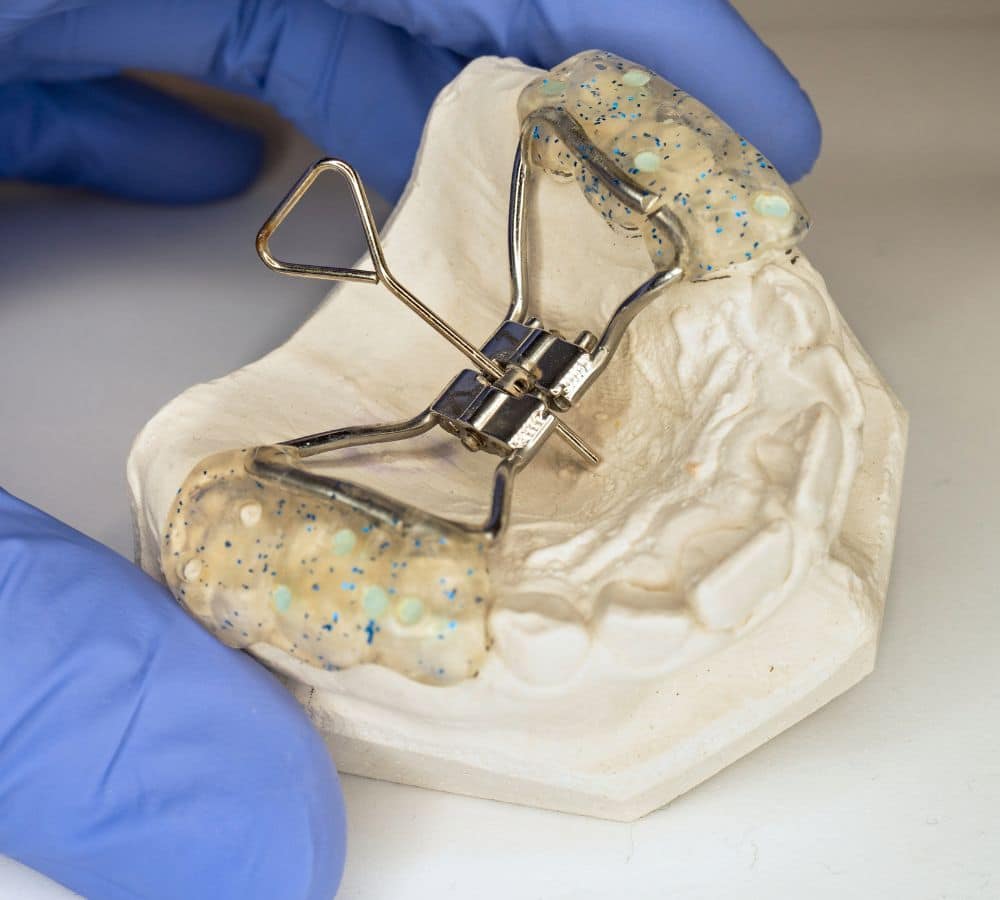
Palatal and arch expansion for airway improvement
For some patients, the underlying cause of sleep-disordered breathing is a narrow palate or under developed upper jaw that restricts the space available for the tongue and limits airflow through the nasal cavity. In these cases, orthodontic palatal expansion can meaningfully improve the airway and reduce the severity of sleep apnoea and snoring.
At Smile Solutions, our specialist orthodontists assess the palate and dental arches as part of the sleep apnoea workup and develop expansion treatment plans when indicated. Expansion appliances are fabricated in our in-house dental laboratory for rapid turn around and precision fit.
For patients with structural upper airway obstruction – including deviated nasal septum, enlarged turbinates, or nasal polyps – our team works closely with ENT specialists who can address these issues in coordination with our dental sleep management. Patients with structural jaw abnormalities that cannot be managed conservatively are referred to our specialist oral and maxillofacial surgeon.
This coordinated approach means that structural causes of sleep apnoea are identified and treated,rather than masked by appliance therapy alone.

Dr Susan Hinckfuss (DEN0001008678) Registered Dentist, Specialist, Specialist Registration in Paediatric Dentistry
Sleep-disordered breathing in children
Snoring and disrupted sleep are not normal in children. Mouth breathing, snoring, restless sleep, night sweats, and difficulty waking in the morning can all indicate sleep-disordered breathing in children – and left unaddressed, these issues can affect growth, behaviour, learning, and development.
At Smile Solutions, our specialist paediatric dentists assesses children from infancy through to adolescence for signs of airway and breathing dysfunction. Our specialist orthodontists evaluate the palate and dental arches for narrow or under developed structures that restrict the airway, and develop palatal expansion programs where indicated.
Our orofacial myologist provides myofunctional therapy for children with mouth breathing, tongue thrust, and incorrect swallowing patterns – addressing the habits that contribute to airway dysfunction and helping children transition to healthy nasal breathing.
Early intervention in childhood can significantly reduce the severity of sleep-disordered breathing in adulthood and may prevent the need for more complex treatment later. If you are concerned about your child’s breathing during sleep, we encourage you to book an assessment.
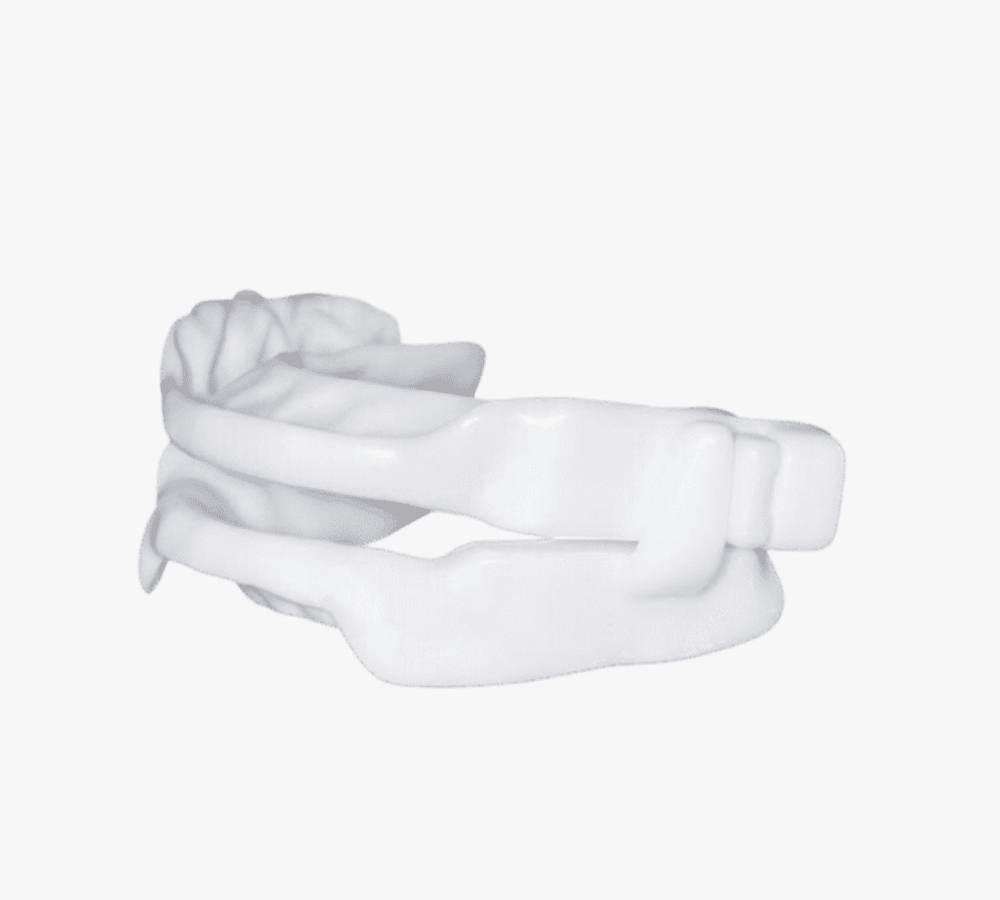
What is a Mandibular Advancement Splint?
A mandibular advancement splint (MAS) is a device used for the treatment of snoring and OSA. It is custom-made and worn similar to mouthguards.
At Smile Solutions we provide our patients with advanced custom Nylon Splints to ensure maximum comfort while you sleep. The superior choice in sleep appliances, the lightweight and thin design allows patients to open and close their mouth comfortably, speak easily and sip water without needing to remove their splint. Unlike acrylic resin appliances, our durable Nylon splints are less prone to fractures.
Fitted to your teeth during sleep, the split works by moving the lower jaw forward from its natural position, opening up the airways, and greatly reducing the risk of airway obstruction and snoring.
How is a mandibular advancement splint made?
Comprehensive examination
Digital scan and fabrication
Insert appointment and final fit
Who will treat my obstructive sleep apnoea?
At Smile Solutions, every patient benefits from the collaborative expertise of our in-house team who all work collaboratively under one roof.
Dr Natasha Hremias holds certification from the Australasian Sleep Association, ensuring that your sleep apnoea management is guided by practitioners trained to the highest standards in dental sleep medicine.
Frequently Asked Questions
What Does a Sleep Study Measure?
A sleep study (polysomnography) is conducted either in a sleep clinic or, in many cases, at home using a portable monitoring device. During the study, a range of physiological parameters are recorded while you sleep:
- Oxygen saturation – how much oxygen is in your bloodstream throughout the night, and how many times it drops below safe levels
- Heart rate – your heart rate patterns through the night and any irregularities associated with breathing events
- REM and non-REM sleep cycles – how much time you spend in each stage of sleep and whether your sleep architecture is disrupted
- Respiratory events – the number of times your breathing stops (apnoeas) or becomes significantly reduced (hypopnoeas) per hour, producing the AHI (Apnoea Hypopnoea Index) score used to classify your sleep apnoea
- Body position – whether your breathing changes when you sleep on your back versus your side
- Body movements – recording of limb movements and restlessness through the night
- Brain activity (in full clinic-based studies) – EEG recording of brain wave patterns used to classify sleep stages precisely
Your sleep physician will review the results and provide a detailed report classifying your condition as mild, moderate, or severe, and recommending the appropriate treatment pathway.
Are nasal dilators or nasal magnets helpful for snoring and sleep apnoea?
Nasal dilators are generally a safe and helpful option for many patients. Unlike mouth taping, nasal dilators simply work to open the nasal cavity wider, which carries minimal risk. At Smile Solutions, we have seen good results with nasal dilators for patients with mild nasal symptoms or mild obstructions.
Benefits include reduced snoring, improved nasal breathing during sleep, and better comfort for patients who also wear a mandibular advancement splint (the dilator helps ensure adequate airflow through the nose while the splint positions the jaw forward).
Nasal dilators may not provide additional benefit for every patient, but we generally consider them a safe and worthwhile option to try.
Is mouth taping safe for sleep apnoea?
Mouth taping is generally not recommended for patients with obstructive sleep apnoea. Sleep apnoea patients are often experiencing reduced oxygen levels during the night. If your airway is obstructed or your nasal septum is deviated, mouth breathing may actually be necessary for your body to receive adequate oxygen. Taping the mouth shut in these circumstances can dangerously reduce oxygen intake.
Mouth taping may be appropriate only for patients who have been thoroughly assessed and cleared of all airway obstructions, nasal septum deviation, and other structural issues. For habitual mouth breathers with no underlying obstruction – patients whose lips simply rest slightly open during sleep -mouth taping can help encourage nasal breathing and reduce snoring.
We strongly recommend consulting with your dentist or sleep physician before attempting mouth taping.A sleep study and clinical assessment should always come first.
How much does a mandibular advancement splint cost and will my private health insurance help?
During your consultation, your dentist will discuss a personalised treatment plan with you, including the cost of the overall treatment. You will also be provided with the relevant item numbers which allow you to take the quote to your health fund to determine your coverage.
My partner is finding it hard to deal with my snoring, does this mean I have obstructive sleep apnoea?
While snoring affects your quality of sleep, it can also affect the lives of those around you. Snoring, alone, does not indicate obstructive sleep apnoea, but a mandibular advancement splint may still be the answer. Snoring is often caused by a blockage in the airway and a mandibular advancement splint can help open your airway, reducing your chances of snoring and improving your quality of life and that of those close to you, including your partner or family.
Are there any side effects of having a mandibular advancement splint or other oral appliance?
- Tenderness or discomfort in teeth and jaw joints
- Excess saliva production
- Temporary or permanent changes to the position of teeth and occlusion (bite)
- Irritation of the soft tissue of the mouth
What alternatives treatments are available for obstructive sleep apnoea?
Continued Positive Airway Pressure (CPAP)
Continued Positive Airway pressure involves wearing a mask attached to a unit that delivers air pumped under pressure forcing the airway open during sleep. CPAP is the treatment of choice in severe cases of obstructive sleep apnoea, however some may find it difficult to tolerate.
Surgery
A number of surgical procedures are sometimes considered, including surgery to open breathing passages in the nose, removal of tonsils or excess tissue at the back of the throat, reduction of tongue size, or surgery to bring the upper or lower jaw forward.
For Medical Practitioners and Allied Health Professionals
If you are a GP, ENT specialist, respiratory physician, cardiologist, or other allied health practitioner andwould like to refer a patient to our Sleep Apnoea clinic, we welcome your referral.
Our team will work collaboratively with you to ensure coordinated care. Patients referred by their GP orspecialist receive priority triage. No formal referral letter is required, although referral letters arewelcomed and help us understand your patient’s history and any previous sleep studies or CPAP trials.
To make a referral, please call 13 13 96 or email theteam@smilesolutions.com.au.
A video overview of our Sleep Apnoea referral pathway for medical practitioners is available here.

Contact Us
Contact Us
"*" indicates required fields
