



For many people, wisdom teeth can become impacted and must be treated, often requiring removal.
What are wisdom teeth?
Our rear teeth are known as the third molars, and most people have four of these – two upper and two lower. They are the last teeth to erupt in the mouth, usually emerging between the ages of 16 and 23 – hence the popular term wisdom teeth. But not everyone has wisdom teeth; some people are born without any or with fewer than four.
Most of us have enough room in our mouths for wisdom teeth to erupt normally, in line with our other teeth. In such cases, wisdom teeth function the same as our other molars and will not require any treatment.
How do I know if my wisdom teeth need to be removed?
These teeth only become impacted when there is insufficient gum space for normal eruption. An impacted wisdom tooth is one that grows out at an angle, or does not fully emerge from the gum line. The gum around that tooth can then become swollen and painful, and in some cases even infected. Some of the symptoms of impacted wisdom teeth include:
- Swollen and bleeding gums
- Pain and swelling around the jaw
- Bad breath
- Headache or jaw ache
- Unpleasant taste when eating
If left untreated, wisdom teeth can cause more serious problems, like dental decay or damage to nearby teeth. However, impacted wisdom teeth do not always show any symptoms, so you might not even realise you have impacted teeth.
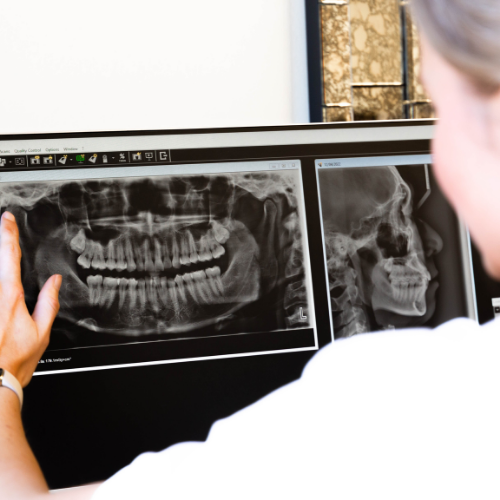
The easiest way to know if you need your wisdom teeth extracted is to visit your dentist for an examination. After your dental and medical history have been checked, you will have an X-ray to assess the position and angulation of your wisdom teeth.
When is the best age to have wisdom teeth removed?
Most dental practices take a reactive approach to wisdom teeth – waiting for symptoms before recommending extraction.
Dr Kia Pajouhesh, founder of Smile Solutions with more than 30 years of clinical experience, takes a different and evidence-based view: when an OPG radiograph confirms wisdom teeth will not erupt into adequate space, the ideal age for removal is 16 to 17.
Why 16-17?
Wisdom tooth roots continue growing until the early 20s. Shorter roots mean a lower risk of proximity to the inferior alveolar nerve – the nerve that can cause temporary or permanent altered sensation if disturbed during surgery. Extracting earlier reduces this risk substantially.
Younger jaw bone is more flexible, heals more readily, and produces faster, more complete post-operative recovery. A 16-year-old recovers in three to five days; the same procedure at 25 takes considerably longer.
Younger teeth are less prone to fracturing during extraction, reducing surgical complexity and complications.
Mesioangulated (forward-tilted) wisdom teeth cause decay and significant bone loss on the adjacent second molar. Extraction before this damage occurs preserves a healthy tooth that cannot be replaced.
Repeated infections around partially erupted wisdom teeth – requiring antibiotics and, in severe cases, hospitalisation – are entirely avoidable with timely extraction.
Cysts can form around impacted wisdom teeth and cause significant bone damage if not detected and managed promptly. Earlier extraction eliminates this risk.
Year 10 or Year 11 is the practical sweet spot – before Year 12 exam pressure, before university schedules, and while the patient is still at home with parents to assist recovery.
Earlier extractions are simpler, attract lower surgical fees, and can often be completed under local anaesthetic rather than general anaesthetic. Timing the procedure while children are still on family private health insurance maximises the benefit of hospital cover.
When wisdom teeth should be kept
Not all wisdom teeth need to be removed. In some cases, wisdom teeth are valuable and should be retained. The decision to extract or retain is always made on individual clinical grounds.
– Adequate space for full eruption. On one or both sides of the mouth, there may be sufficient room for the wisdom tooth to erupt fully and become a functional chewing tooth. In this case, the wisdom teeth are welcomed as permanent members of the arch and monitored alongside the rest of the dentition.
– Extraction orthodontics. Patients who had premolar teeth removed as part of orthodontic treatment may have more space at the back of the jaw, allowing wisdom teeth to erupt and function usefully.
– Potential replacement for damaged molars. In younger patients with heavily decayed or compromised first or second molars, wisdom teeth may be deliberately retained as potential replacements if those molars are eventually lost.
The key is a collaborative assessment between a general dentist and an orthodontist – both available at Smile Solutions under one roof at 220 Collins Street. Only when it is confirmed the wisdom teeth serve no functional purpose and are likely to cause problems is extraction recommended. And when extraction is indicated: sooner is unequivocally better.
Frequently Asked Questions
What is the difference in cost between extracting at 16 versus 25?
Wisdom teeth extracted at 16 to 17 are typically less complex – shorter roots, less dense bone, lower likelihood of deep impaction. Many can be removed by a general dentist under local anaesthetic, from$475 to $725 per tooth. By 25, the same teeth may require specialist oral and maxillofacial surgery under general anaesthesia, with significantly higher fees. Timing the procedure during the simpler window – while the patient is still on family private health insurance – makes both clinical and financial sense.
Do I need an OPG x-ray to assess wisdom teeth?
An OPG (panoramic jaw x-ray) is the standard and most informative investigation for wisdom teeth assessment. It shows all four wisdom teeth, their positions, root lengths, and relationships to the inferior alveolar nerve and adjacent teeth. Collins Street Imaging on Level 9 of the Manchester UnityBuilding provides OPG imaging on-site at Smile Solutions.
Can impacted wisdom teeth cause other problems beyond infection and decay?
Cysts can form associated with impacted wisdom teeth, particularly lower wisdom teeth, and may cause damage to surrounding bone if not detected and managed. This is one reason why impacted wisdom teeth that are retained should not simply be left unmonitored – regular radiographic review is important. In very rare cases, changes in the tissue surrounding a long-standing impacted tooth may require specialist investigation. Timely extraction when indicated is the most straightforward way to eliminate these risks.
Can wisdom teeth cause bad breath?
Yes. Partially erupted wisdom teeth can create a flap or pocket of gum tissue that is extremely difficult to clean. Food particles and bacteria become trapped beneath the gum, allowing odour-producing bacteria to thrive.
These bacteria release volatile sulphur compounds, which are a common cause of persistent bad breath. Because the source of the odour is below the gum line, brushing, flossing and mouthwash often cannot eliminate it completely. If a problematic wisdom tooth is the cause, removing it usually eliminates the bacterial trap and, in most cases, resolves the associated bad breath.
Who will perform my wisdom teeth removal?
Your procedure may be performed by a general dentist or a specialist oral & maxillofacial surgeon, depending on complexity and anaesthetic choice. Specialists have extensive training in hospital-based surgery and can manage both simple and complex cases safely.
What happens during a wisdom teeth consultation?
Your wisdom teeth assessment begins with an OPG (orthopantomogram), a panoramic dental X-ray that allows your dentist to evaluate the position of your wisdom teeth, their roots and the available space in your jaw. If additional detail is required, a CBCT (3D cone beam CT) scan may also be recommended. Both imaging services are conveniently available on-site, with results ready for your dentist to review during the same visit.
Following your assessment, your dentist will discuss whether your wisdom teeth should be monitored or removed and explain the most appropriate treatment options for your situation. Straightforward and moderately complex extractions can often be performed under local anaesthetic by one of our experienced general dentists. More complex cases—such as deeply impacted wisdom teeth, teeth close to important nerves, or patients requiring sedation—are referred to our specialist oral and maxillofacial surgeons. Where appropriate, wisdom teeth removal can also be performed under general anaesthetic in a Melbourne private hospital.
How much does wisdom teeth removal cost?
The cost of wisdom teeth removal depends on the complexity of the extraction, the number of teeth being removed and whether treatment is performed by a general dentist or specialist.
As a guide:
- Single wisdom tooth extraction (general dentist, under local anaesthetic): from $475–$725
- Removal of all four wisdom teeth (general dentist, under local anaesthetic): from $1,950–$2,950
- Complex surgical extractions by a specialist: pricing varies and an itemised quote will be provided following your consultation.
We also offer flexible payment options through Payright, Humm and MyDentaPlan. If your procedure requires a general anaesthetic, your private health insurance may contribute to hospital costs, depending on your level of cover.
Why do so many people need their wisdom teeth removed?
Wisdom teeth have become a modern dental problem because our jaws are generally smaller than those of our ancestors. Early humans ate tough, fibrous foods that required extensive chewing, which helped stimulate the growth of larger jaws with enough room for all 32 teeth, including the wisdom teeth.
Today, our diets are much softer and more processed. Over many generations, this has contributed to smaller jaw development, while the size and number of our teeth have remained largely the same. As a result, there is often not enough space for wisdom teeth to erupt properly, leading to crowding, impaction and the need for removal.
How do I know if I need my wisdom teeth removed?
Why is it important to remove wisdom teeth?
My child is 16. Should I be thinking about their wisdom teeth now?
Yes – this is exactly the right time to have an OPG radiograph taken to assess the wisdom teeth. An OPG in mid-adolescence will show whether the wisdom teeth have adequate space to erupt. If they do not, acting at 16 to 17 produces the best clinical outcome: shorter roots, less dense bone, faster recovery, and a simpler, less expensive procedure. Call 13 13 96 to arrange an assessment.
Is it safe to remove wisdom teeth at 16?
Yes – in fact, it is safer than waiting. At 16, the jaw bone is less dense and heals more readily, the tooth roots are shorter and less likely to be associated with the inferior alveolar nerve, and the teeth themselves are less brittle. The risks associated with wisdom tooth extraction increase with age, not decrease.
How should I prepare for wisdom tooth removal?
Preparation depends on the number and complexity of teeth being removed. You may need to fast the night before, avoid alcohol for 24 hours prior, and arrange for someone to accompany you to the procedure and take care of you for at least 24 hours if general anaesthetic is used. Your clinician will provide detailed instructions specific to your procedure.
Where is the procedure performed?
Wisdom teeth removal can be done in the dental chair under local anaesthetic or in a hospital under general anaesthetic. Your clinician will discuss the most appropriate option based on your needs and preferences.
What’s the difference between local and general anaesthetic?
Local anaesthetic numbs the area being treated, keeping you awake, though you may feel pressure. General anaesthetic is administered in a hospital by a specialist anaesthetist, and you will be completely unconscious with no memory of the procedure.
When should wisdom teeth be removed?
Removal is often recommended in young adults under 25, as recovery tends to be quicker and less painful. If your wisdom teeth are likely to cause problems, early removal is generally advised.
What are the risks of wisdom teeth removal?
Risks include general surgical risks, infection, bleeding, dry socket (when the blood clot in the extraction site fails or is dislodged), and temporary nerve trauma causing altered sensation in the lips, tongue, or gums. Your clinician will discuss risks specific to your situation during consultation.
What should I expect after wisdom teeth removal?
Some bleeding, discomfort, and bruising are normal. Recovery time depends on the complexity of your procedure. You will be provided with a post-operative pack including instructions, gauze, mouthwash, syringes, and emergency contact numbers. Pain medication and antibiotics may also be prescribed.
How should I care for my mouth after surgery?
Maintain a soft diet with cold or room-temperature foods. Avoid hot drinks, drinking through a straw, smoking, alcohol, blowing your nose, excessive spitting or rinsing, and vigorous physical activity for at least 24 hours. These precautions help prevent dry socket and promote healing.

Contact Us
Contact Us
"*" indicates required fields
