




Root canal therapy (or RCT) is treatment of the infected nerve of a tooth.
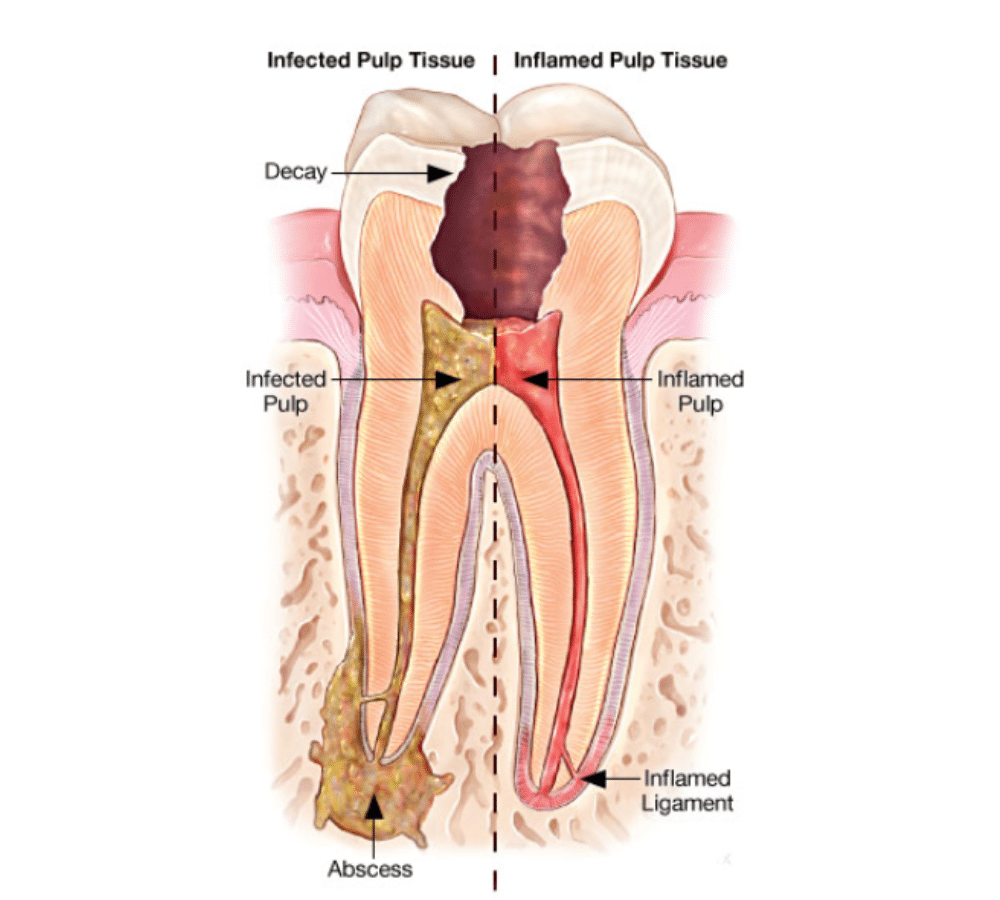
What’s involved in root canal therapy?
When bacteria penetrates the centre of the tooth, called the pulp – which consists of sensitive nerves and blood vessels inside the root canal – this part of the tooth can become inflamed and infected, causing pain. If the condition is left untreated, an abscess can form at the root tip and bacteria can spread to the jawbone and the rest of the body. Infection within a tooth can be treated either by extraction or with root canal therapy, the latter generally being the preferred option.
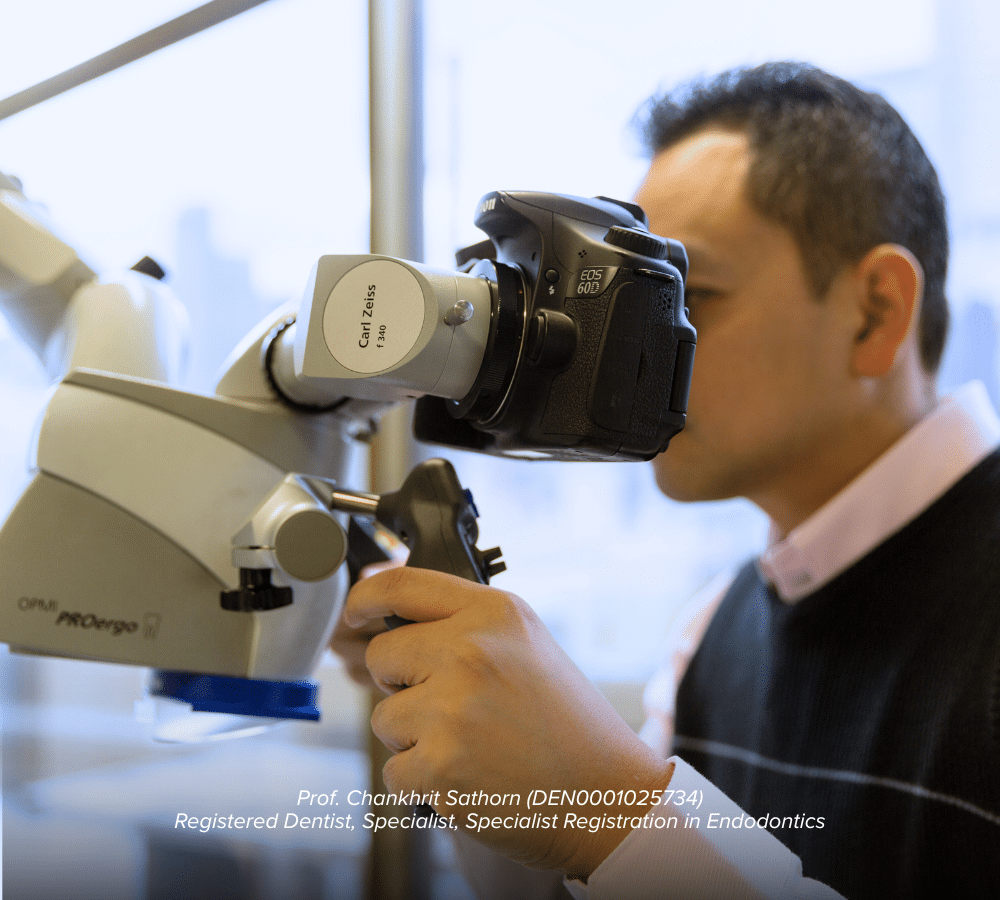
Saving your natural tooth with root canal therapy
At Smile Solutions, our practitioners always aim to preserve a tooth whenever possible rather than remove it. Root canal therapy achieves this by removing the affected pulp, cleaning the nerve canals with an antibacterial solution, and placing a temporary filling until a permanent filling or crown can be fitted.
The immediate benefit of root canal therapy is significant pain relief. In the longer term, the treatment allows for preservation of the tooth. The alternative, being removal of the tooth, results in a space, which should then be filled with a dental bridge or an implant and crown – both expensive treatments that require ongoing maintenance.
Common signs and symptoms that a root canal is required
- Sharp or lingering pain when eating or drinking something hot or cold
- Pain when biting or chewing
- A constant, throbbing ache
- Swelling around the tooth or face
What is the process of a root canal procedure?
Endodontic treatment can often be performed in one or two visits and normally involves the following steps.
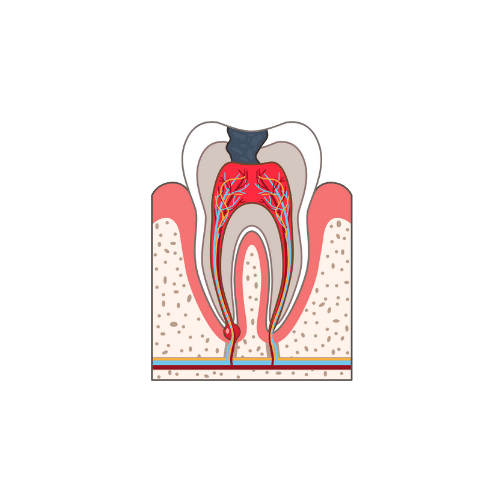
Step 1: Examination and anesthesia
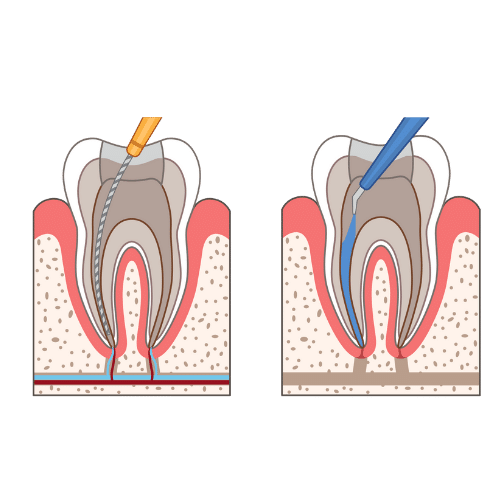
Step 2: Cleaning and shaping
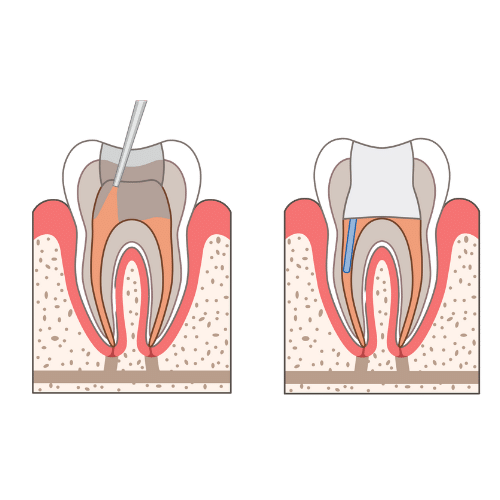
Step 3: Sealing and temporary filling
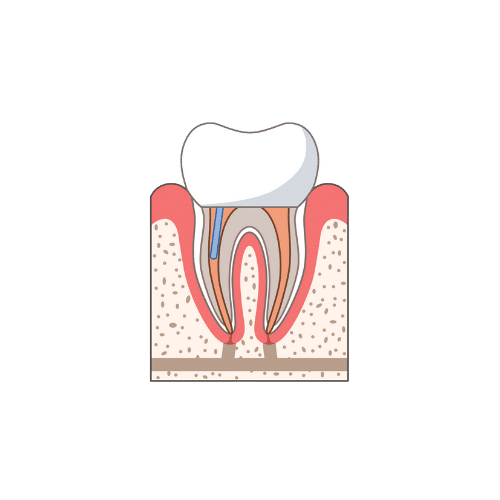
Step 4: Final restoration
Frequently Asked Questions
How much does endodontic treatment cost?
The cost varies depending on how severe the problem is and which tooth is affected. Molars are more difficult to treat and are usually more expensive. Most dental insurance policies provide cover for endodontic treatment. Generally, root canal treatment and restoration of the natural tooth is less expensive than the alternative of having the tooth extracted and restored. All treatment plans and associated costs will be discussed with you before treatment begins.
Can all teeth be treated with a root canal?
Most teeth can be treated. Occasionally, a tooth can’t be saved because the root canals are not accessible, the root is severely fractured, the tooth doesn’t have adequate bone support or the tooth cannot be restored. When endodontic treatment is not effective, surgery may be an alternative to save the tooth.
Why would a tooth need to be treated again after a root canal?
A tooth may become reinfected after a root canal due to trauma, decay or a damaged filling. In these cases, re-treatment may be possible. The old filling is removed, the canals are checked for issues, and your options and likely outcomes are discussed before continuing.
What are the alternatives to root canal treatment?
Though root canal procedures are intended to help save your tooth, this is not always possible. Often, the only alternative to endodontic treatment is extraction of the tooth. Missing teeth can make you self conscious, affect your ability to bite and chew, cause other healthy teeth to shift and have a negative impact on your overall health. For these reasons, the extracted tooth should be replaced with an artificial one. Though nothing looks, feels or functions exactly like your natural tooth, dental implants are a viable alternative to help you maintain a beautiful and functional smile.
What is endodontic surgery?
The most common endodontic surgical procedure is called an apicoectomy or root-end resection. When inflammation or infection persists in the bony area around the end of your tooth after endodontic treatment, your endodontist may perform an apicoectimy. In this procedure, the endodontist opens the gum tissue near the tooth to expose the underlying bone, and the infected tissue is removed, and a small fllling may be placed to seal the root canal. Local anaesthetics make the procedure comfortable, and most patients return to their normal activities.
How should I care for my tooth after treatment?
You should avoid chewing or biting on the treated tooth until it has been fully restored by your dentist. The unrestored tooth is more susceptible to fracture, so you should see your dentist for a permanent restoration as soon as possible. Continue to maintain good oral hygiene and attend regular check-ups. You will receive post-treatment care instructions after your procedure.
Who performs root canal treatment?
Root canal treatment can be done by a general dentist or specialist endodontist.
General dentists can perform many root canal treatments.
Specialist Endodontists hold a general dentistry degree plus a further 3–4 years of advanced postgraduate education in endodontics, focusing only on diagnosing and treating pain caused by toothaches and damage to dental pulp and surrounding tissues.
While many general dentists provide excellent root canal care, a specialist’s additional training can make a big difference for complex cases.

Contact Us
Contact Us
"*" indicates required fields