

These three terms get used interchangeably, but they mean very different things – and the distinction matters for your treatment.
If you have ever searched online for help with jaw pain, clicking, or teeth grinding, you have probably encountered three terms used almost interchangeably: TMJ, TMD, and bruxism. Forums, social media, and even some health websites use them as though they mean the same thing. “I have TMJ,” someone will say, or “My bruxism is causing TMD,” or “Is TMJ the same as grinding?”
The confusion is understandable. These conditions overlap, coexist, and influence each other. But they are not the same thing, and lumping them together makes it harder to get an accurate diagnosis and effective treatment. Understanding the difference between TMD vs TMJ vs bruxism is not pedantic – it is genuinely clinically important.
At Smile Solutions, we see patients every week who have been treated for the wrong condition because the terminology was muddled from the start. A patient told they “have TMJ” is given a night guard. A patient diagnosed with bruxism is treated with Botox. Neither treatment addresses the actual problem because nobody took the time to clarify what was really going on. This article aims to fix that.
1. TMJ: The Joint Itself
Let us start with the simplest one. TMJ stands for temporomandibular joint. It is an anatomical structure, not a disease. You have two of them, one on each side of your face, just in front of your ears. Every human being has TMJs, just as every human being has knees.
The TMJ is where your lower jaw (mandible) connects to the temporal bone of your skull. It is a remarkably complex joint – a combined hinge and sliding mechanism with a fibrocartilaginous disc sandwiched between the two bony surfaces. This disc acts as a cushion and allows the smooth, multi-directional movement that makes chewing, speaking, and yawning possible.
When someone says “I have TMJ,” what they usually mean is “I have a problem with my TMJ.” Everyone has a TMJ. What they are trying to describe is TMD – a disorder of that joint, its associated muscles, or both.
This distinction matters because it shapes how you think about the problem. “Having TMJ” sounds like a binary diagnosis – you either have it or you do not. In reality, temporomandibular problems exist on a spectrum, and the specific type of problem determines the appropriate treatment.
2. TMD: The Disorder
TMD stands for temporomandibular disorder (sometimes disorders, plural). It is an umbrella term encompassing a wide range of conditions that affect the TMJ, the muscles of mastication (chewing muscles), or both. TMD is the diagnosis. TMJ is just the joint.
The Diagnostic Criteria for Temporomandibular Disorders (DC/TMD), the internationally recognised classification system, divides TMD into several categories:
Joint disorders:
- Disc displacement with reduction – the disc slips out of position but snaps back into place during jaw opening (this is what causes the clicking or popping sound)
- Disc displacement without reduction – the disc is permanently displaced, often causing limited mouth opening or “locking”
- Degenerative joint disease (osteoarthritis) – breakdown of the joint surfaces, causing pain, crepitus (grinding sounds), and progressive dysfunction
- Joint hypermobility – excessive looseness of the joint, sometimes with subluxation (partial dislocation)
Muscle disorders:
- Myalgia – pain originating from the muscles of mastication, often described as a dull ache in the jaw, temple, or face
- Myofascial pain – pain with referral patterns, where trigger points in the jaw muscles send pain to other areas (teeth, ears, forehead)
- Muscle spasm – sudden, involuntary contraction of the jaw muscles, often extremely painful
Combined disorders:
Many patients have elements of both joint and muscle dysfunction simultaneously. A disc displacement may cause compensatory muscle guarding, which develops into chronic myofascial pain. Or chronic muscle hyperactivity from bruxism may lead to overloading and degeneration of the joint itself.
Why the TMD classification matters:
Different types of TMD require different treatments. A patient with disc displacement may benefit from a repositioning splint or arthrocentesis. A patient with myofascial pain may respond to physiotherapy, trigger point therapy, and stress management. Treating all TMD patients with the same generic night guard is like treating all headaches with the same medication – sometimes it helps, often it does not, and occasionally it makes things worse.
3. Bruxism: The Habit
Bruxism is the habitual, involuntary clenching or grinding of teeth. Unlike TMD, which is a diagnostic category describing a disorder, bruxism is a behaviour – a parafunctional activity (meaning a movement pattern that serves no functional purpose).
Bruxism comes in two distinct forms, and this distinction is clinically critical:
Sleep bruxism
Sleep bruxism occurs during sleep and is now classified as a sleep-related movement disorder. The forces generated during sleep bruxism can be extraordinary – studies have measured clenching forces of up to 250 per cent of normal maximum voluntary bite force during sleep bruxism episodes.
Sleep bruxism is often associated with micro-arousals during sleep – brief transitions from deeper to lighter sleep stages. These micro-arousals can be triggered by sleep-disordered breathing (such as obstructive sleep apnoea), periodic limb movements, or other sleep disturbances. This is why sleep bruxism cannot be effectively managed without considering the patient’s sleep quality.
Research has also identified a link between sleep bruxism and airway maintenance. Some patients clench or protrude their jaw during sleep as an unconscious mechanism to keep their airway open. In these cases, bruxism is not the disease – it is a compensatory response to the real problem, which is a compromised airway.
Awake bruxism
Awake bruxism occurs during waking hours and is more commonly associated with stress, anxiety, concentration, or habit. It tends to involve sustained clenching rather than the rhythmic grinding patterns seen in sleep bruxism.
Awake bruxism is more amenable to behavioural intervention because the patient is conscious and can learn to recognise and interrupt the habit. Cognitive behavioural strategies, biofeedback, and mindfulness techniques can be effective.
Consequences of bruxism:
Regardless of whether it occurs during sleep or waking hours, sustained bruxism can cause:
- Tooth wear, fracture, and eventual tooth loss
- Muscle hypertrophy (enlargement of the jaw muscles, particularly the masseters)
- Muscle pain and fatigue
- TMJ overloading, potentially leading to disc displacement or degenerative changes
- Headaches, particularly temporal headaches
- Disrupted sleep (for the patient and, in the case of audible grinding, their partner)
Why Getting the Terminology Right Leads to Better Treatment
When a patient comes to us saying “I have TMJ,” the first thing we do is ask the right questions to determine what is actually happening. The treatment pathway for a patient with:
- Disc displacement without pain (observation and monitoring) is completely different from
- Chronic myofascial pain driven by awake bruxism (behavioural therapy, physiotherapy, splint therapy) which is completely different from
- Sleep bruxism secondary to obstructive sleep apnoea (sleep study, airway management, mandibular advancement device) which is completely different from
- Degenerative joint disease of the TMJ (anti-inflammatory management, possible arthrocentesis, joint protection)
Calling all of these “TMJ” and treating them with a standard night guard is why so many patients feel that “nothing works” for their jaw problems. The treatment did not work because it was the wrong treatment for their specific condition.
How We Sort It Out at Smile Solutions
At our dedicated TMD Clinic, the diagnostic process is designed to distinguish precisely between these overlapping conditions.
- Detailed history taking allows us to differentiate sleep bruxism from awake bruxism, identify potential contributing factors (sleep quality, stress, medications, postural habits), and understand the timeline and pattern of symptoms.
- Structured clinical examination following the DC/TMD criteria identifies specific joint disorders (disc displacement, degeneration, hypermobility) and muscle disorders (myalgia, myofascial pain, spasm).
- EMG muscle mapping provides objective data on muscle activity patterns – distinguishing between hyperactive muscles (suggesting bruxism or muscle disorder) and normal function.
- T-Scan bite force analysis reveals force distribution imbalances that may be contributing to joint overloading or muscle compensation.
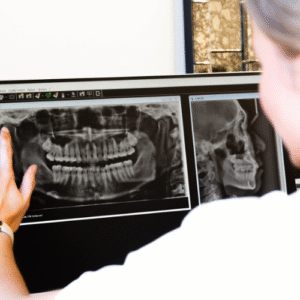
- CBCT imaging allows three-dimensional assessment of joint anatomy, condylar morphology, and airway dimensions – critical for identifying both structural TMD and potential sleep disordered breathing contributing to bruxism.
The result is not a vague diagnosis of “TMJ” or “bruxism.” It is a specific, data-supported diagnosis that drives a targeted treatment plan. That might involve splint therapy, physiotherapy, osteopathy with our in-house osteopath Rachel Smith, Botox, orthodontics, sleep medicine referral, or a combination – but it will be based on what is actually happening in your specific case.