
Everything you need to know about wisdom teeth removal costs in 2026 – from a single straightforward extraction to all four under general anaesthesia.
How Much Does Wisdom Teeth Removal Cost in Melbourne?
Everything you need to know about wisdom teeth removal costs in 2026 – from a single straightforward extraction to all four under general anaesthesia.
Wisdom teeth have a way of making themselves known at the most inconvenient times. Maybe it’s a dull ache that’s been building for weeks. Maybe your dentist has flagged them on an x-ray and suggested they need to come out before they cause problems. Either way, one of your first questions is probably about cost.
Understanding wisdom teeth removal cost in Melbourne isn’t straightforward because the price depends on so many variables: how many teeth, how impacted they are, whether you want to be awake or asleep, and who performs the procedure. A simple upper wisdom tooth extraction and a deeply impacted lower wisdom tooth requiring surgical removal under general anaesthesia are fundamentally different procedures with fundamentally different costs.
At Smile Solutions, we perform wisdom tooth extractions ranging from routine chairside removals to complex surgical cases. Here’s an honest breakdown of what you can expect to pay in Melbourne in 2026.
Wisdom Teeth Removal Cost: The Numbers
Simple extraction (erupted wisdom tooth, minimal complication):
- $250 to $500 per tooth
Surgical extraction (partially or fully impacted, requires bone removal or sectioning):
- $400 to $800 per tooth
All four wisdom teeth (simple extractions, local anaesthesia):
- $1,000 to $2,000
All four wisdom teeth (surgical, local anaesthesia):
- $1,600 to $3,200
All four wisdom teeth (surgical, under general anaesthesia in hospital or day surgery):
- $3,000 to $6,000+ (includes anaesthetist and facility fees)
All four wisdom teeth (surgical, IV sedation in-chair):
- $2,500 to $5,000
These ranges reflect the genuine spread of costs across Melbourne practices in 2026. Where you fall within the range depends on the factors we’ll explore below.
Why Wisdom Teeth Costs Vary So Much
1. Level of impaction
This is the single biggest factor affecting both complexity and cost. Wisdom teeth are classified by their position:
- Erupted: The tooth has come through the gum fully and sits in a relatively normal position. These are the simplest and cheapest to remove.
- Soft tissue impaction: The tooth has partially emerged but is still covered by gum tissue. Requires a small incision to access.
- Partial bony impaction: The tooth is partially trapped in the jawbone. Requires bone removal to extract.
- Full bony impaction: The tooth is completely encased in bone. This is the most complex extraction, often requiring bone removal, tooth sectioning (cutting the tooth into pieces for removal), and careful management of the surrounding nerve.
A fully erupted upper wisdom tooth might take 5 minutes to remove. A deeply impacted lower wisdom tooth near the inferior alveolar nerve might take 30 to 45 minutes of careful surgical work. The difference in clinical time, skill, and risk explains the cost difference.
2. Number of teeth being removed
Most patients have all four wisdom teeth removed at once, which is more cost-effective per tooth than removing them one at a time across separate appointments. However, some patients only have one or two problematic wisdom teeth, or may have been born without all four.
3. Anaesthesia and sedation
This is often the factor patients are most uncertain about:
- Local anaesthesia only: Included in the extraction cost. You’re fully awake but the area is numb. Suitable for simple extractions and patients comfortable in the dental chair.
- Happy gas (nitrous oxide): Add $100 to $200 to the treatment cost. Takes the edge off anxiety while you remain conscious and responsive.
- Oral sedation: Add $200 to $400. Tablet-based sedation taken before your appointment. You’ll be drowsy but conscious.
- IV sedation (twilight sedation): Add $500 to $1,500. Administered by a sedationist or anaesthetist. You’ll be deeply relaxed and unlikely to remember the procedure, but you’re not fully unconscious.
- General anaesthesia: Add $1,500 to $3,000+. Requires an anaesthetist and either a hospital or accredited day surgery facility. You’re completely unconscious. Generally reserved for complex surgical extractions, highly anxious patients, or cases where all four teeth require significant surgery.
At Smile Solutions, we offer the full spectrum of sedation options – from happy gas through to general anaesthesia. Our Collins Street Specialist Centre and our team of over 80 clinicians, including specialist oral surgeons, mean we can handle everything from routine extractions to the most complex surgical cases.
4. Who performs the extraction
- General dentist: Suitable for erupted or simple soft tissue impactions. Cost is generally at the lower end of the ranges above.
- Oral surgeon (specialist): Recommended for bony impactions, teeth near the inferior alveolar nerve, complex root anatomy, or medically complex patients. Specialist fees are typically 20 to 40 per cent higher than GP fees but come with additional surgical training and experience managing complications.
5. The range of services available under one roof
A practice with in-house oral surgeons, on-site CBCT scanning, and comprehensive sedation options can often deliver better value than a general practice that needs to refer you to a hospital for general anaesthesia. At Smile Solutions, having specialists, advanced imaging, and sedation all in one location means fewer appointments, no external referral fees, and a more streamlined experience overall.
The OPG and CBCT: Imaging Costs
Before any wisdom tooth extraction, you’ll need imaging:
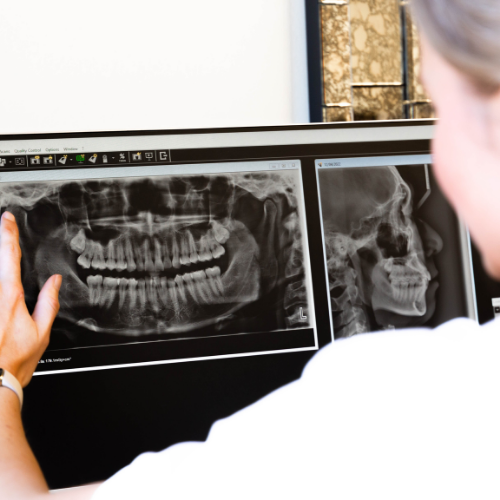
- OPG (orthopantomogram): $80 to $150. A panoramic x-ray showing all your teeth, jaws, and the position of wisdom teeth relative to nerves and sinuses. This is the standard baseline image.
- CBCT (cone beam CT scan): $200 to $400. A 3D scan providing detailed information about root shape, nerve proximity, and bone density. Essential for impacted lower wisdom teeth near the inferior alveolar nerve.
These imaging costs are separate from the extraction fee. At Smile Solutions, we have on-site OPG and CBCT facilities, so you won’t need to visit a separate imaging centre.
Health Fund Coverage for Wisdom Teeth Removal
Wisdom tooth extraction is generally covered under dental extras policies, though the level of coverage varies:
Under general dental extras:
- Simple extractions may be partially covered, with fund contributions of $100 to $250 per tooth
- Surgical extractions may fall under major dental with different benefit levels
Under major dental extras:
- Surgical extractions typically attract higher benefits: $200 to $500 per tooth
- Hospital and anaesthetist fees may be partially covered if you have hospital cover with dental surgery included
Key considerations:
- Check whether your policy has a sub-limit for extractions or oral surgery
- General anaesthesia in a hospital setting is a separate claim from the dental procedure – you’ll claim the surgical fees through your extras cover and the hospital/anaesthetist fees through your hospital cover
- Waiting periods of 2 to 12 months apply depending on whether it’s classified as general or major dental
- Annual benefit limits may affect how much you can claim
We process health fund claims on the spot at Smile Solutions and can advise you on the relevant item numbers to check with your fund before your procedure.
What to Expect: The Procedure and Recovery
On the day
Recovery timeline
Time off work
Plan for 2 to 3 days off work for routine extractions, and up to a week for complex surgical removals under general anaesthesia. Many patients who have the procedure on a Thursday or Friday are back at work on Monday.
Common Questions About Wisdom Teeth Costs
Is it cheaper to remove all four at once?
Yes, almost always. You save on consultation and anaesthesia costs, and many practices offer a package rate for four extractions. It also means only one recovery period rather than multiple.
Can I claim wisdom teeth on Medicare?
Medicare generally does not cover dental procedures. However, children aged 2 to 17 may be eligible for the Child Dental Benefits Schedule (CDBS), which can cover some extraction costs. Adult wisdom tooth removal in a hospital under general anaesthesia may have the hospital component partially covered by Medicare if you’re a public patient, but wait times can be extensive.
Should I go to a hospital or a dental practice?
For routine extractions under local anaesthesia or IV sedation, a well-equipped dental practice is perfectly appropriate and usually more convenient. Hospital-based general anaesthesia is recommended for highly complex cases, patients with significant medical conditions, or those requiring deep unconscious sedation.
Book Your Wisdom Teeth Assessment
If your wisdom teeth are causing problems or your dentist has recommended they be assessed, our team at Smile Solutions can provide a thorough evaluation, clear cost estimate, and a treatment plan tailored to your situation. With specialist oral surgeons, on-site 3D imaging, and the full range of sedation options, we handle everything from the simplest to the most complex wisdom tooth cases.