

Cutting through the vague pricing and fine print to give you an honest breakdown of dental implant costs – from a single tooth to a full mouth.
Cutting through the vague pricing and fine print to give you an honest breakdown of dental implant costs – from a single tooth to a full mouth.
Losing a tooth changes more than your smile. It changes how you eat, how you speak, and often how you feel about yourself. If you’ve been researching dental implant cost in Melbourne, you’ve probably discovered that the pricing landscape is confusing at best and deliberately opaque at worst.
Some clinics advertise implants “from $2,999” without clarifying what that includes. Others quote $6,000 or more without explaining why. The truth is that a dental implant isn’t a single item with a single price. It’s a multi-stage treatment involving surgical placement, a healing period, and a custom-made prosthetic tooth. Each stage has its own costs, and the total depends on factors specific to your mouth.
At Smile Solutions, we believe in giving you the full picture upfront. No asterisks, no surprise bills, no “that doesn’t include the crown” conversations after you’ve already started treatment.
Here’s what dental implants actually cost in Melbourne in 2026.
Understanding What You’re Paying For
A dental implant treatment has three main components, and it’s important to understand each one because clinics quote them differently.
When a clinic quotes you a price for an “implant,” ask specifically whether it includes all three components. The cheapest quotes almost always cover only the fixture.
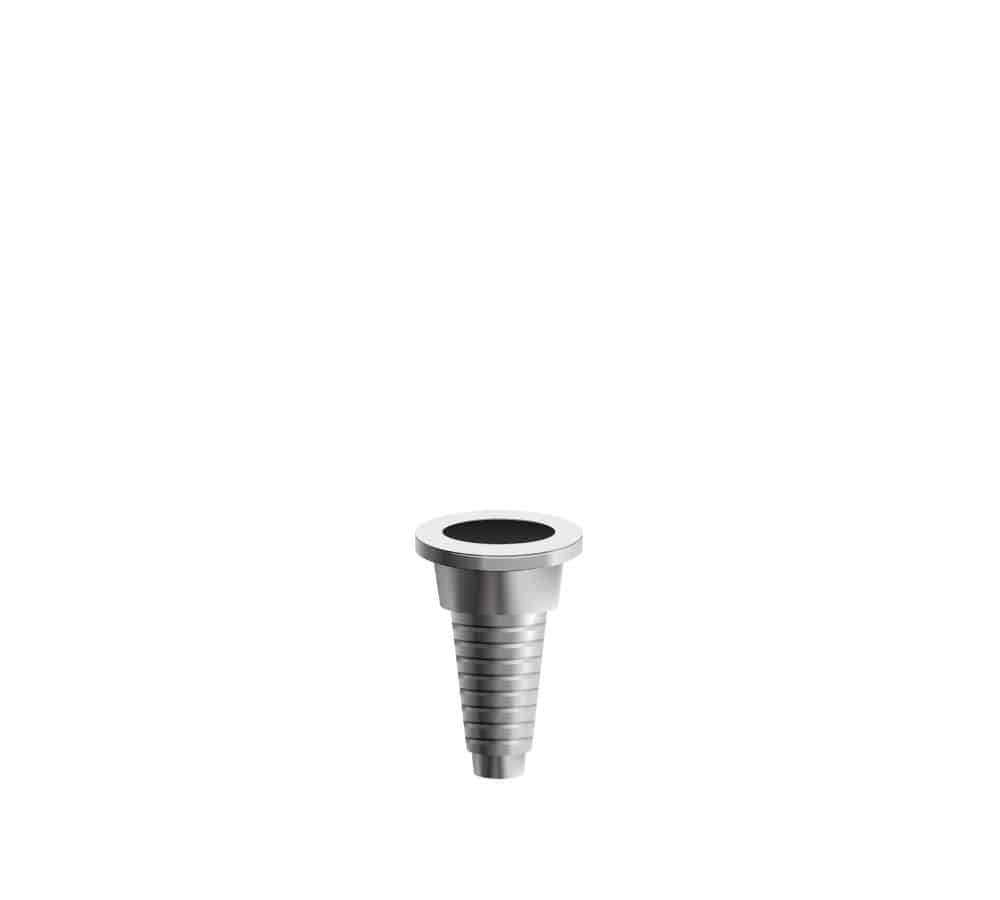
The implant fixture
A small titanium or zirconia screw that is surgically placed into your jawbone. This acts as the artificial tooth root.
Cost: $2,500 to $4,500.
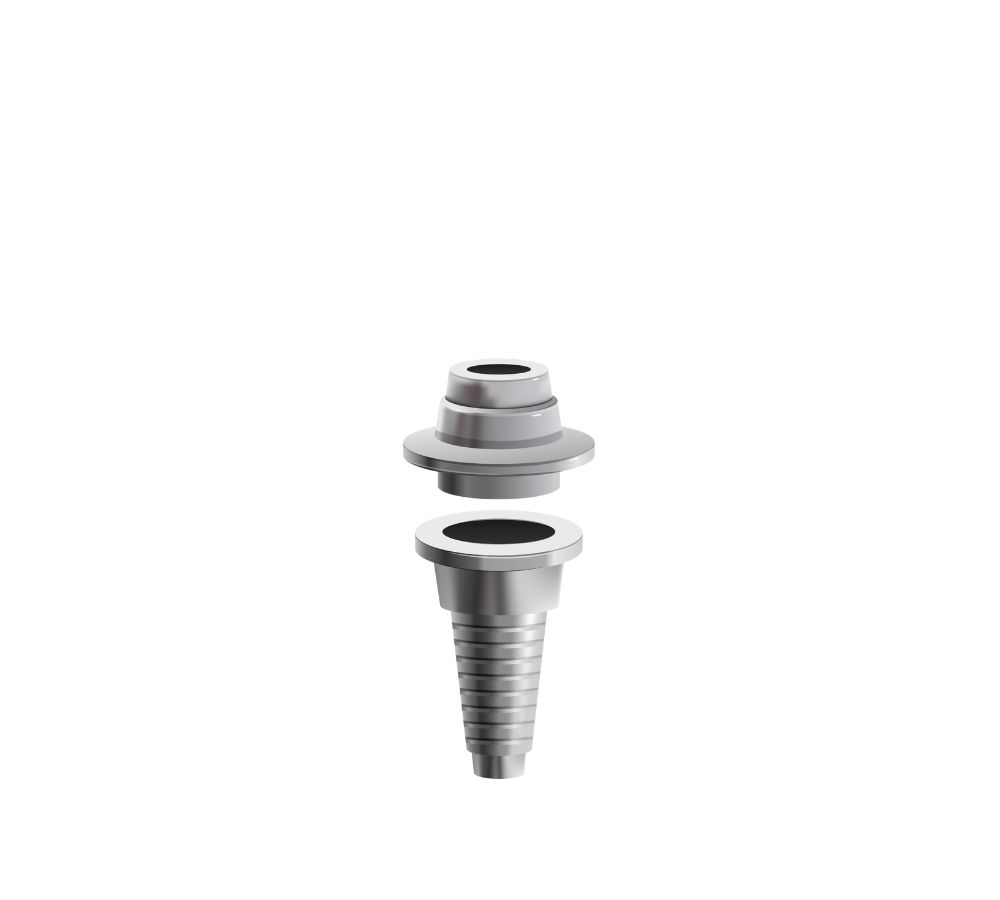
The abutment
A connector piece that attaches to the implant and supports the final restoration.
Cost: $500 to $1,200.
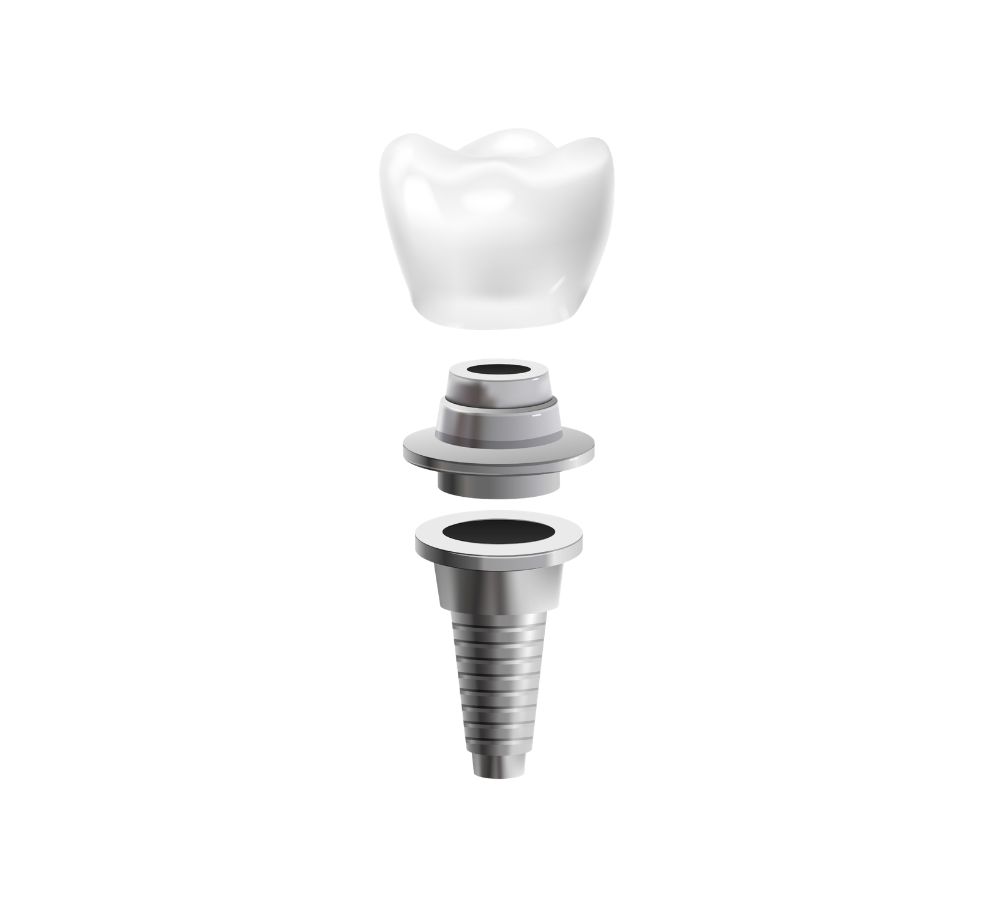
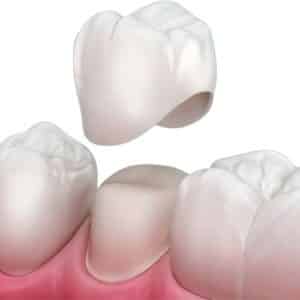
The crown (or prosthesis)
The visible tooth that sits on top of the abutment. This is custom-made to match your natural teeth in shape, size, and colour.
Cost: $1,500 to $3,000.
Dental Implant Cost in Melbourne: Complete Price Ranges
Here’s what you can realistically expect to pay in Melbourne in 2026 for the complete treatment:
- Single dental implant (fixture + abutment + crown): $4,500 to $7,000
- Two to three implants: $9,000 to $20,000 (depending on location in the mouth and complexity)
- Implant-supported bridge (replacing 3-4 teeth on 2 implants): $8,000 to $18,000
- Implant-supported denture (overdenture on 2-4 implants): $10,000 to $25,000 per arch
- All-on-4 full arch (fixed prosthesis on 4 implants): $20,000 to $40,000 per arch (covered in detail in our separate All-on-4 guide)
These ranges are genuine market rates across Melbourne. Where you fall within the range depends on several factors we’ll explore below.
Factors That Significantly Affect Implant Costs
1. Bone grafting and augmentation
This is one of the most common reasons implant costs exceed initial expectations. After a tooth is lost, the surrounding jawbone begins to shrink. If too much bone has been lost, it needs to be rebuilt before an implant can be placed.
- Minor bone grafting (socket preservation at time of extraction): $300 to $800
- Localised bone grafting: $500 to $2,000
- Major bone augmentation (block grafts, ridge augmentation): $2,000 to $5,000
- Sinus lift (needed for upper back teeth where the sinus cavity has expanded into the bone): $2,000 to $4,500
Not everyone needs bone grafting. If you’re having an implant placed relatively soon after losing a tooth and your bone volume is adequate, you may avoid this cost entirely. This is one reason we encourage patients not to delay implant treatment after an extraction.
2. Sinus lifts
When replacing upper back teeth (premolars and molars), the maxillary sinus often sits too close to where the implant needs to go. A sinus lift carefully raises the sinus membrane and places bone graft material underneath to create enough depth for the implant.
There are two types:
- Internal (crestal) sinus lift – less invasive, done through the implant site: $1,500 to $2,500
- External (lateral window) sinus lift – more complex, needed when significant height is required: $2,500 to $4,500
3. Implant brand and system
Not all implants are the same. Premium implant systems from manufacturers like Straumann, Nobel Biocare, and Astra have decades of clinical research behind them, with documented long-term success rates above 95%. They also have global support networks, meaning if you move overseas or need work done elsewhere, any qualified dentist can access the compatible components.
Budget implant systems may cost less initially but can present challenges with component availability, long-term research backing, and compatibility if future work is needed. At Smile Solutions, we use established, research-backed implant systems because we’re thinking about where your implant needs to be in 20 years, not just tomorrow.
4. Who places your implant: specialist vs general dentist
This is a significant factor in both cost and outcomes.
- General dentist with implant training – May charge $4,000 to $5,500 for a complete single implant. Many GPs place implants competently, particularly straightforward cases.
- Specialist (oral surgeon, periodontist, or prosthodontist) – Typically $5,000 to $7,000+ for a complete single implant. Specialists have completed additional years of postgraduate training specifically in implant surgery and complex rehabilitation.
At Smile Solutions, we have over 25 specialists on our team, including oral surgeons, periodontists, and prosthodontists. For complex cases involving bone grafting, sinus lifts, or full-mouth rehabilitation, specialist expertise can make a meaningful difference to the outcome. For straightforward single implants in healthy bone, an experienced GP with implant training may deliver an equally excellent result.
The advantage of a multidisciplinary practice like ours is that we can match you with the right clinician for your specific case. Not every implant needs a specialist, and not every case should be handled by a generalist.
5. Extraction and site preparation
If the damaged tooth hasn’t been removed yet, extraction costs will be part of your treatment plan:
- Simple extraction: $200 to $400
- Surgical extraction: $350 to $700
- Socket preservation grafting (recommended to maintain bone for future implant): $300 to $800
6. Temporary teeth during healing
Implants need time to integrate with the bone, typically 3 to 6 months. During this healing period, you’ll need a temporary solution, especially for visible teeth:
- Temporary denture (flipper): $400 to $800
- Temporary bridge: $600 to $1,500
- Immediate temporary crown on the implant: $500 to $1,000 (not suitable for all cases)
7. CT scans and digital planning
Modern implant placement uses 3D cone-beam CT (CBCT) scanning for precise planning:
- CBCT scan: $200 to $400
- Surgical guide (3D-printed guide for precise implant placement): $300 to $800
These aren’t optional extras. They’re essential tools for safe, predictable implant placement. Any clinic offering implants without 3D imaging should raise concerns.
Health Fund Coverage for Dental Implants
Dental implants are classified as major dental treatment, and health fund coverage varies significantly.
What funds typically cover
- A portion of the surgical placement (item 661): $400 to $1,200 depending on your cover level
- A portion of the abutment (item 672): $200 to $600
- A portion of the implant crown (item 613 or 615): $300 to $800
- Total fund contribution per implant: $900 to $2,600
Important considerations
- 12-month waiting periods apply for major dental on most policies
- Annual benefit limits mean your fund may cover a portion of one implant but not multiple implants in the same year
- Some funds have sub-limits specifically for implant treatment
- Pre-approval is recommended – your fund can confirm your benefit before you proceed
At Smile Solutions, we process health fund claims on the spot through HICAPS and can provide you with all the item numbers you need to get a pre-treatment estimate from your fund.
Why the Cheapest Implant Quote Isn’t Always the Best Value
We regularly see patients who chose a low-cost implant provider and are now seeking retreatment. Common issues include:
- Implant failure due to inadequate planning or poor surgical technique
- Poorly fitting crowns that trap food, cause gum inflammation, or look obviously artificial
- Unknown implant systems where replacement parts are unavailable or incompatible
- No bone grafting where it was needed, leading to thin bone around the implant and eventual failure
- Complications from implant placement without proper 3D imaging
A failed implant doesn’t just waste your initial investment. Salvage treatment often costs more than doing it properly the first time, and in some cases, the bone damage from a failed implant makes replacement more difficult or impossible.
The Implant Timeline: What to Expect
Initial consultation and planning (Week 1)
Extraction and grafting if needed (Week 2-4)
Healing from extraction (6-12 weeks)
Implant placement surgery (day procedure)
Integration period (3-6 months)
Abutment and crown placement (final appointment)
Understanding the treatment timeline helps you plan both your time and your finances. Total time from start to finish is typically 4 to 9 months, though immediate implant protocols can shorten this in suitable cases.
Book Your Implant Consultation
If you’re considering dental implants and want a clear, honest assessment of what they’ll cost for your specific situation, we’re here to help. Our team at Smile Solutions includes oral surgeons, periodontists, and prosthodontists who collectively place thousands of implants and can guide you to the right solution.