




Over 30 years of teeth-whitening experience at Smile Solutions
What is teeth whitening?
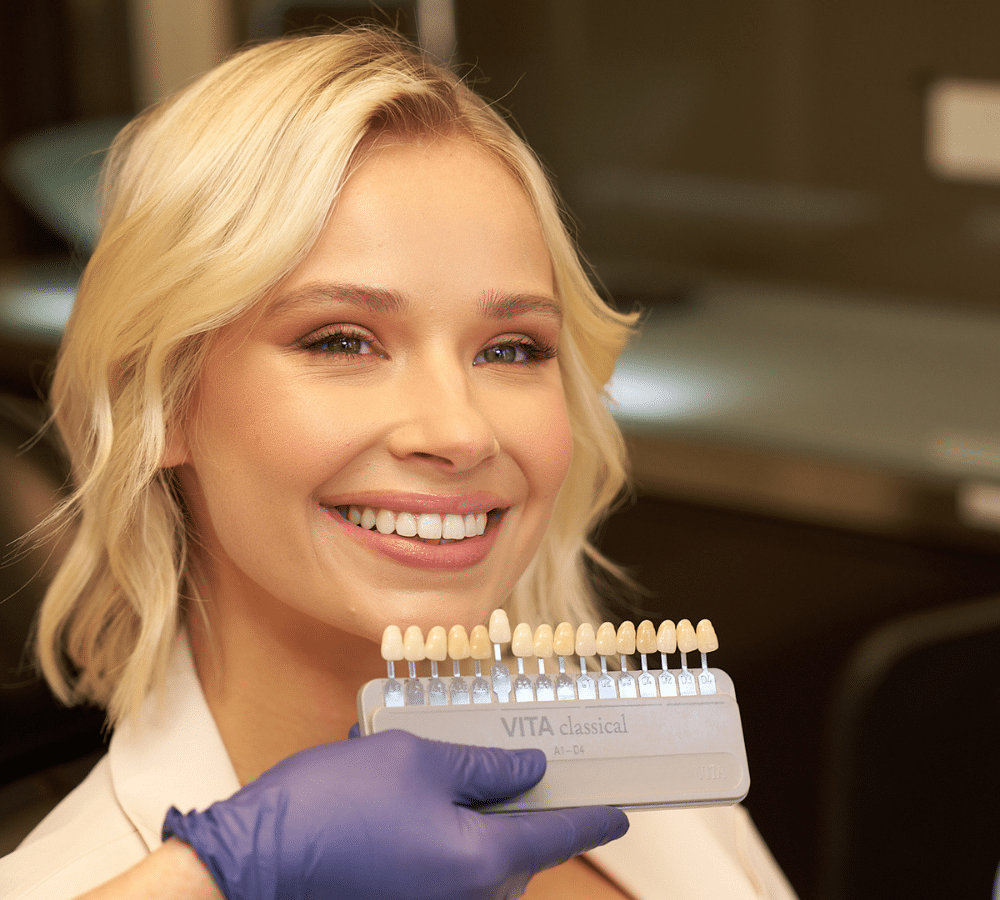
Teeth whitening is a safe and effective way to brighten your smile by removing stains and discolouration from your teeth. Treatments are tailored to your needs and performed under professional supervision to achieve the best results.
With over 30 years’ teeth whitening experience and the latest Philips Zoom WhiteSpeed technology and Pola Advanced Tooth Whitening System, Smile Solutions are experts in helping countless patients achieve whiter, brighter smiles.
Zoom! in-chair professional teeth whitening $475
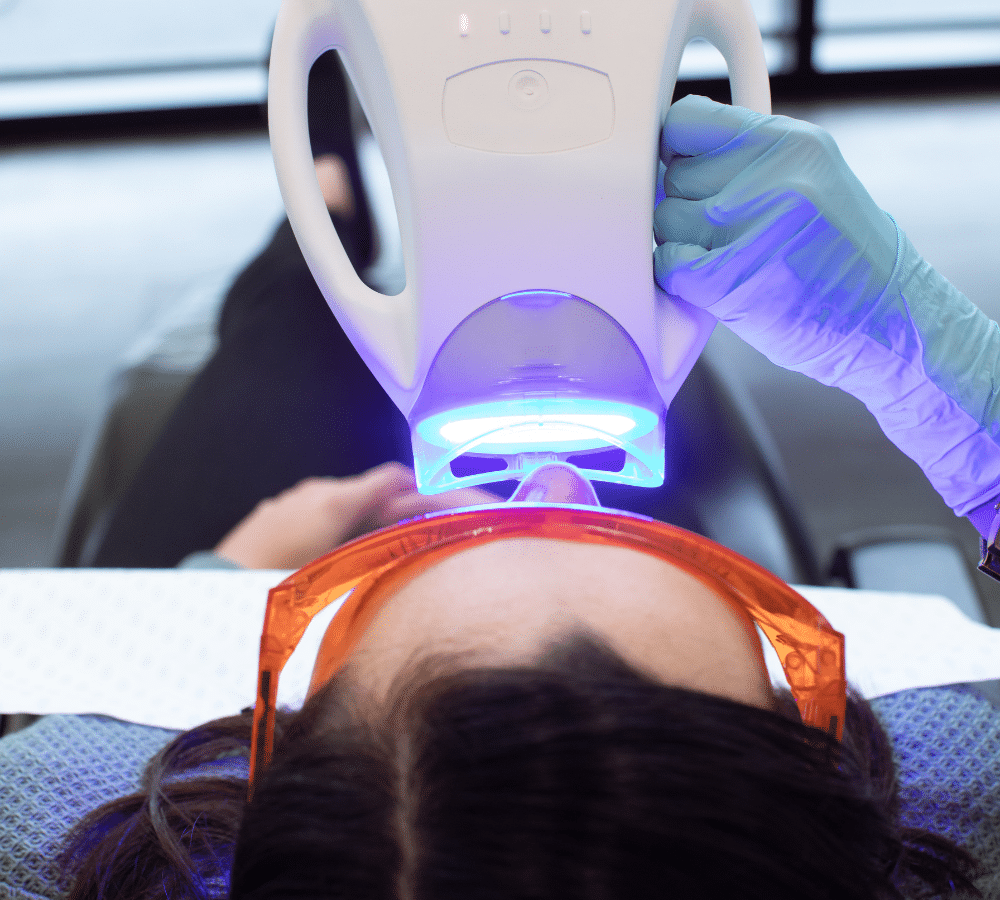
We use Philips’ most advanced teeth whitening treatment for those who want noticeable results in just one hour: Philips Zoom! WhiteSpeed. This one-hour in-chair procedure combines a patented whitening gel with the unique “Zoom” WhiteSpeed blue LED lamp. After treatment, your teeth could be up to 8 shades whiter, helping to reduce stains and discolouration from food, drinks, and ageing.
During the procedure your clinician will apply a rubber shield and liquid latex to protect your gums, and will then apply the advanced whitening gel to your teeth in 15 minute intervals for a total of 60 minutes. The Zoom! WhiteSpeed blue LED lamp activates the gel and accelerates the whitening. If you’re sensitive, the lamp’s variable settings help to minimise any discomfort.
At home professional teeth whitening $395
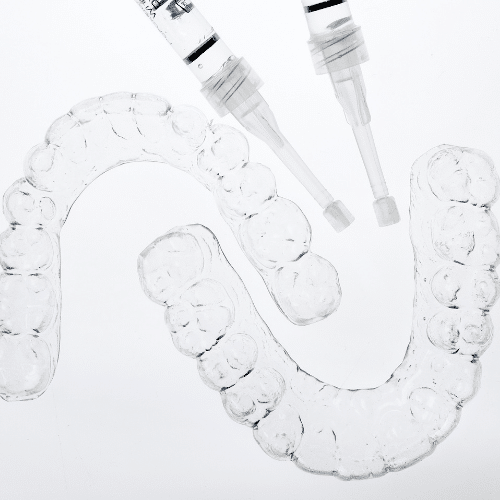
Our at-home kit contains close fitting custom-made teeth whitening trays and a user-friendly low-concentration whitening gel. Whitening gel is applied to the trays, which need to be worn consistently for an hour every day for a week or two to achieve the desired result.
You can comfortably whiten your teeth either while you sleep (by using our Pola Night system) or for an hour during the day (by using our Pola Day System). It offers you the convenience of being able to use it whenever you like for the 7 to 14–day period. We provide you with enough whitening gel for your initial treatment period and a number of maintenance applications. Under your clinician’s supervision this technique is safe for your teeth and gums.
Frequently Asked Questions
Do I need to see the dentist before my teeth whitening procedure?
Before any whitening process, we recommend that patients have their teeth cleaned by a hygienist to remove any plaque build-up and ensure the best results.
Given the different causes of discolouration, it is also important to have your dentist thoroughly assess your dental health to determine whether teeth whitening will be an effective treatment for you.
How effective is the teeth whitening procedure?
Teeth whitening involves breaking down the discolouration so that your teeth look whiter. Whether the process will work for you depends largely on the cause of your discolouration. Each whitening method has a different degree of effectiveness and permanency. Your dentist will advise you on the degree of whitening and the process that is best for your teeth and more likely to give you the results you are seeking.
It’s also important to note that the results will not be the same for everyone, as everyone’s teeth are different. Some people might find they are able to achieve a whiteness that’s several shades brighter that their existing tooth colour, while others may only achieve one to two shades whiter.
Before any whitening process, we recommend that patients have their teeth cleaned by a hygienist to remove any plaque build-up and ensure the best results.
Can anybody have the teeth whitening procedure?
Not everyone’s teeth are suitable for whitening. We recommend having a check up with your dentist in advance. This can be scheduled at the time of your teeth clean, so your dentist can assess for sensitivity, tooth decay, existing restorations, gum disease and any oral conditions that could hinder the effectiveness of the teeth whitening procedure. If you have veneers, crowns or fillings, they will not change colour with whitening, which means you can be left with different-coloured teeth.
How do I maintain my white teeth after the procedure?
After any teeth whitening procedure, it is recommended that you avoid smoking, drinking coffee, tea, soft drink and red wine, eating highly coloured foods (such as berries or beetroot) and using mouthwash. These can all reverse the effectiveness of teeth whitening and further stain your teeth. These images are simply an educational guide and by no means represent a guarantee of outcome.
What causes tooth discolouration?
There are two types of tooth discolouration: extrinsic and intrinsic.
Extrinsic discolouration – that is, staining confined to the enamel – is most commonly caused by age, diet and poor oral hygiene. As we age, our tooth enamel can thin and start to reveal the yellow dentin beneath. In addition, diet and poor oral hygiene can cause our tooth enamel to stain, especially if our diet is high in sugars and acidic food and if we don’t maintain good oral hygiene. Teeth whitening treatment is most effective in removing this kind of staining.
Intrinsic discolouration – that is, discolouration of the inner structure of the tooth – can be the result of trauma. This could include impact to the tooth when you were a child, such as a fall that damaged the developing permanent tooth; or trauma that involved internal bleeding, which discoloured the permanent tooth. Intrinsic staining usually requires additional dental treatment to achieve whitening.
What are the risks associated with teeth whitening?
Teeth whitening is generally safe when used in the correct way. One of the biggest risks associated with teeth whitening arises when it is applied incorrectly or by someone who is not properly qualified.
Because a bleaching agent is involved, some of the side effects of teeth whitening can include damage to the gums, tooth sensitivity and irritation, and possibly bleeding in the oesophagus and stomach if the bleach is swallowed.
Sensitivity from teeth whitening usually only lasts a day or two. Patients with receding gums, cracks in their teeth or failing restorations (which can result in leaking) are the most likely to experience sensitivity. Gum irritation can arise as a result of contact between the whitening agent and your gums.

Contact Us
Contact Us
"*" indicates required fields