




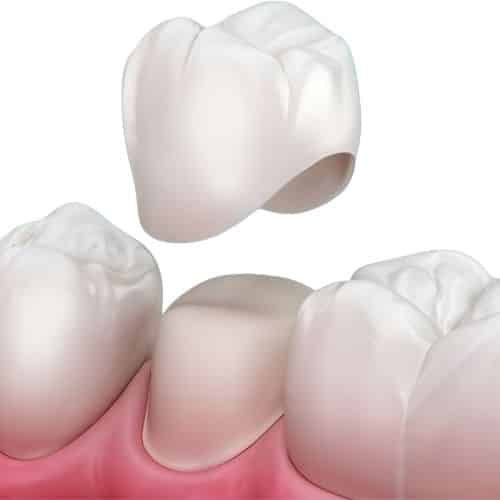
A dental crown, sometimes referred to as a cap, is bonded to a tooth and may help restore its appearance and function.
What are porcelain crowns?
Crowns are commonly used for heavily repaired or broken teeth, teeth with discoloured fillings, or teeth that need protection following root canal therapy.
A crown can be fitted over almost any prepared tooth and, with proper care, can last 15 years or more.
When would I need a porcelain crown?
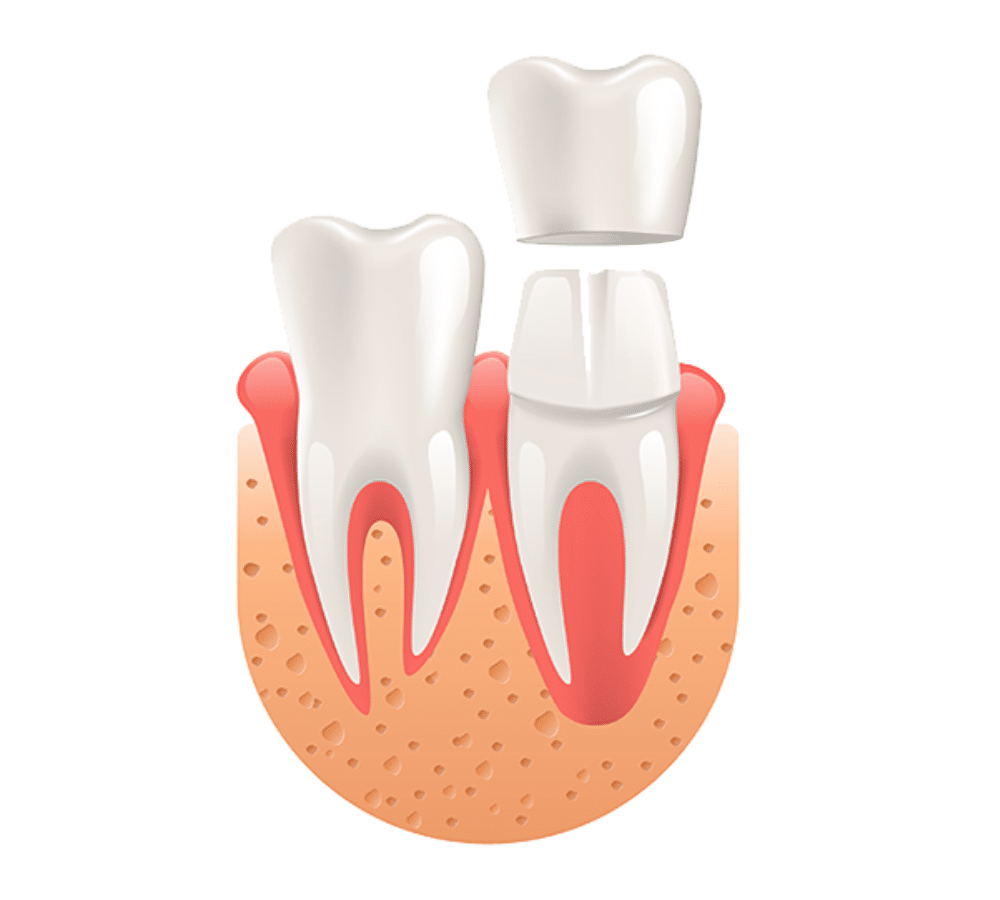
Dental crowns are used to restore teeth when there is insufficient dental enamel for a veneer. They are custom-made to match the shape, size, colour, and surface characteristics of your surrounding teeth, providing a seamless and long-lasting restoration.
Types of Crowns
Porcelain crowns
Metal crowns
PFM crowns
Frequently Asked Questions
How do I care for my crowns?
Crowns perform just like your natural teeth. While they are very durable, you still need to maintain good dental hygiene and to brush and floss the crown just as you do with your other teeth. With regular dental check-ups, proper cleaning and the use of remineralisation toothpastes, you will be able to minimise the risk of decay around your dental crown.
How long do crowns last?
Dental crowns can still be subject to fracture and cavities, so it is important to look after them just as you would your natural teeth. If properly maintained through good oral hygiene and regular dental check-ups, crowns can last for many years. The material of your dental crown can affect the durability of your crown, but factors other than durability also need to be considered (such as aesthetics, survival rate and kindness to opposing teeth), so you are encouraged to discuss the different options with your dentist to choose the most suitable crown material.
What does the crown procedure involve?
All types of crown can be fabricated at an external dental laboratory, where special techniques are used to design and construct a crown that will perfectly fit your tooth. At your first appointment with your dentist, your tooth will be prepared to the desired shape and moulds will be taken. A temporary cap will be placed over the prepared tooth to protect it. Then, at a second appointment a few weeks later, the crown will be fitted and bonded in place using bonding cement.
Ceramic crowns can also be designed and milled onsite in the dental surgery, during your appointment, using CEREC CADCAM technology. CEREC allows for your tooth to be prepared and fitted with a crown all in one appointment – this means no temporary crowns, no moulds of your teeth and a much quicker procedure.
How much do crowns cost?
The costs involved with dental crowns can vary depending on the tooth that requires the crown, the materials used, and the clinician who performs treatment.
Who will perform my crown procedure?
At Smile Solutions your veneer or crown procedure will be done by one of our experienced cosmetic dentists or specialist prosthodontists, with your filling procedure being performed by one of our general dentists. Our specialist prosthodontists can provide all aspects of prosthodontic care, including veneers, crown and bridge, occlusal rehabilitation and dental implants. Prosthodontists are specialists in the restoration and replacement of teeth; they work closely with dental technicians to ensure that each custom-made prosthesis is natural looking and comfortable to wear every day.

Contact Us
Contact Us
"*" indicates required fields