



If you experience a toothache, the best course of action is to book an emergency dental examination to diagnose and treat the cause of your pain.
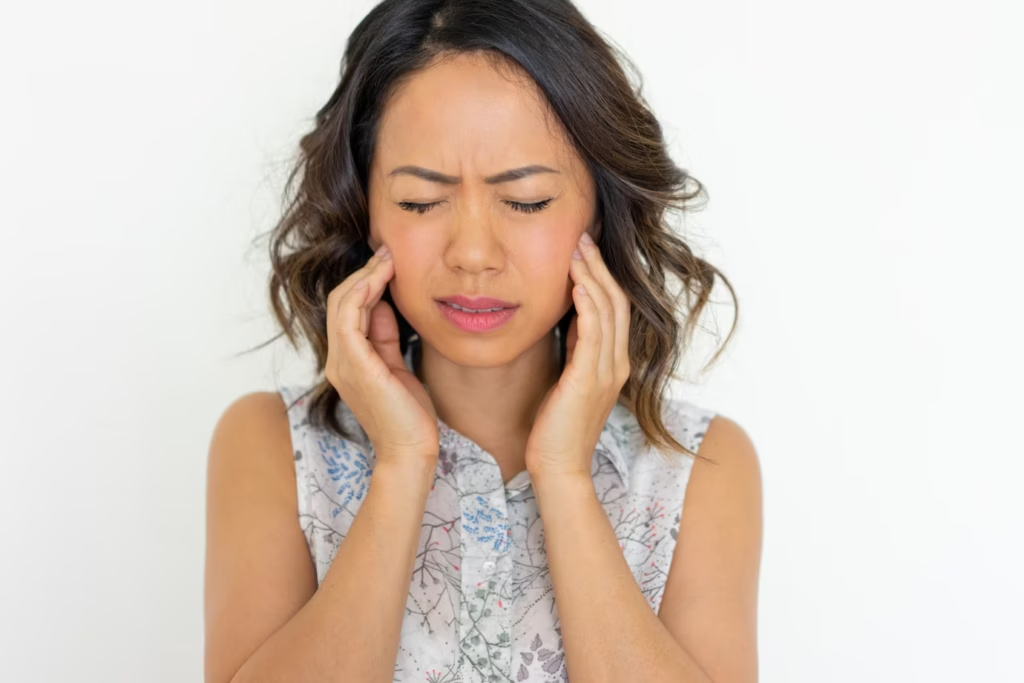
Assessing the tooth pain
Describing your pain to our reception team when booking your appointment, and again when you meet with your dentist, will help us prepare for your appointment and then appropriately diagnose and treat your condition.
Your dentist may ask you about:
- whether you think a wisdom tooth could be coming through.
- the type of pain you are experiencing – sharp or dull?
- how often the pain occurs – intermittent or chronic?
- the tooth or area the pain is coming from
- triggers for the pain – chewing, biting, or consuming hot and/or cold foods and drinks
- how long you’ve been experiencing the pain
- whether you have suffered trauma to the tooth or area
- whether the pain wakes you at night
What are the common causes and symptoms of a toothache?
Tooth decay
Causes & Risk Factors
Tooth decay (dental caries, a dental cavity or a hole) is usually caused by a lack of brushing or flossing and poor oral hygiene. It can also be caused by:
- excessive consumption of sugar or acid in foods or drinks, resulting in a breakdown of tooth structure
- weakened tooth enamel (such as in molar hypomineralisation)
- saliva quantity and quality
- previous history of decay
Common Symptoms
If decay is detected early, it does not usually cause discomfort. When the caries has progressed deeper into the tooth (and gets closer to the nerve) it presents as toothache when eating or drinking; sensitivity to cold, hot or sweet stimuli; and dark spots or shadowing on the teeth.
Treatment & Management
When caries is suspected, your dental clinician will most likely take an X-ray to confirm the presence and size of the decay, and will check for infection or other pathology. All of these factors, plus further tests and clinical examination specific to your condition, will help determine the best course of treatment.
In most cases, dental caries can be diagnosed and treated pain free.
Gum recession
Causes & Risk Factors
Gum recession results most commonly from brushing too hard or using a toothbrush that has abrasive bristles.
Another common cause is periodontitis, a form of gum disease.
Recession means that the gums have shrunk away from the teeth, exposing the root surface. As the root surface does not have the same enamel coating as the rest of the crown, patients generally experience sensitivity to cold stimuli. If the root surface is brushed with force, it too can be compromised, eventually requiring a filling to repair or halt the damage.
Common Symptoms
The main symptom of gum recession is sensitivity.
Gum recession may also lead to aesthetic concerns such as yellowing of the tooth margins.
Treatment & Management
Sensitive toothpaste can assist with reducing this sensitivity. If that doesn’t work, your dentist can explain the treatments available to fill or cover up the exposed areas and thus stop further sensitivity.
Any discolouration can be addressed by your dentist.
Gum disease
Causes & Risk Factors
Gum disease is the inflammation and infection of the gums. There are two types:
- Gingivitis is swelling and redness of the gums, not an infection.
- Periodontitis is chronic infection affecting the gum and supporting bone. Risk factors include smoking, family history, suboptimal oral hygiene, and infrequent dental cleans and checks.
Common Symptoms
Gingivitis: bleeding of the gums when flossing.
Periodontitis: red, swollen, bleeding gums; bad breath; and loose teeth.
Treatment & Management
Gingivitis is easily treatable and cured with excellent oral hygiene habits, and regular dental cleans.
Patients suffering from periodontitis may need to be treated and monitored by a gum specialist.
Infection
Causes & Risk Factors
Infection occurs when there is decay affecting the nerve of a tooth, trauma, an impacted tooth (usually a wisdom tooth), or gum disease.
Common Symptoms
Toothache caused by infection is most commonly described as throbbing, intense pain. Patients may also have a fever and find that the pain dissipates if there is an abscess that pops.
It can sometimes be detected visually through swelling of the face and/or neck, or by the sighting of an abscess.
Other symptoms of infection include pain when eating and drinking, and sensitivity to hot and cold stimuli.
Treatment & Management
If you suspect infection in your mouth, it is important to seek advice from your dentist so that they can treat the infection as soon as possible.
Tooth cracks & fractures
Causes & Risk Factors
Cracks can happen in any tooth but are more commonly seen in premolars and molars (the main chewing teeth towards the back of your mouth).
Tooth fracture is usually a result of grinding or heavy clenching, past trauma and/or large fillings.
Common Symptoms
The symptoms of a cracked tooth include sharp pain when eating hot, cold or sweet foods and drinks; and sharp pain when biting and releasing.
Treatment & Management
Treatment depends on the extent of the crack or fracture. Minor damage may be monitored or repaired with a filling or bonded restoration. More significant fractures often require a crown to protect and strengthen the tooth. If the nerve is affected, root canal treatment may be required. Early assessment improves the chances of saving the tooth.
Teeth grinding
Causes & Risk Factors
Grinding and clenching, known as bruxism, is when there is overactivity of the muscles that assist in chewing, resulting in irreversible wear of the teeth. It is most commonly caused by mental stress and occurs subconsciously (often when patients are sleeping).
Common Symptoms
Symptoms of bruxism include generalised sensitivity to hot and cold stimuli, generalised toothache, facial pain, and stiffness or pain in the jaw/ jaw joint.
Dentally it presents as multiple worn teeth or teeth that are flattened, chipped, broken or loose.
Treatment & Management
A thorough check-up of the teeth and jaw structures will determine whether bruxism is the cause of your tooth pain or wear.
Broken or lost restoration
Causes & Risk Factors
A broken or missing filling.
Common Symptoms
Sharp edges, sensitivity to hot or cold, discomfort when biting, food trapping, or a visible gap where the filling or crown has come out.
Treatment & Management
Your dentist will assess the area and replace or repair the restoration. If the tooth underneath has been damaged or decay is present, additional treatment may be required before the restoration is replaced.
Enamel loss
Causes & Risk Factors
Wear, erosion or abrasion that leads to enamel loss and sensitivity.
Common Symptoms
Increased sensitivity to hot, cold or sweet foods and drinks; dull or rough tooth surfaces; and changes in tooth colour.
Treatment & Management
Treatment focuses on protecting the teeth and reducing sensitivity. This may include fluoride treatments, protective coatings or fillings, and advice on diet and brushing habits to prevent further enamel loss.
Frequently Asked Questions
What will my dentist do at the appointment?
Your dentist will ask about the type of pain (sharp or dull), how often it occurs (intermittent or chronic), the specific tooth or area affected, and any triggers such as chewing, biting, or consuming hot or cold foods and drinks. They may also ask how long you’ve had the pain, whether you’ve experienced trauma, if the pain wakes you at night, or if you suspect a wisdom tooth may be coming through. This information helps your dentist determine the best treatment plan.
What steps can I take to prevent toothache?
Immaculate oral hygiene is imperative in reducing oral conditions that cause toothache, such as gum infection or tooth decay. To maintain the best tooth and gum health and reduce the chance of decay, you should:
- use a fluoridated toothpaste to brush your teeth twice daily for two minutes
- floss once daily
- attend a regular six-monthly check-up and clean with your dentist and hygienist
- maintain a regular healthy diet, including plenty of water
- rinse your mouth with water after eating and/or drinking; this will reduce any residue and return your oral pH to a healthy level
- chew sugar-free chewing gum or suck on sugar-free mints after eating and/or drinking; this will stimulate your natural saliva flow.
What can I do to relieve a toothache?
Make a dental appointment as soon as possible to have the underlying condition diagnosed and treated.
Over-the-counter pain/headache medication can be used, if needed, until you secure a dental appointment. A topical (localised) pain reliever can also be effective when applied to the affected area. Don’t place aspirin or other painkillers directly on your gum or your painful tooth as these will burn the surrounding tissue.

Contact Us
Contact Us
"*" indicates required fields
