Root canal treatment has a reputation problem. But the real question is not whether to have one – it is who should perform it.
Few dental procedures carry as much dread as the root canal. The phrase itself has become cultural shorthand for unpleasant experiences: “I’d rather have a root canal than sit through that meeting.” It is the dental bogeyman, the procedure everyone fears and no one looks forward to.
The irony is that modern root canal treatment, performed well, is typically no more uncomfortable than having a filling placed. The real discomfort comes from the infection that makes the root canal necessary in the first place. The procedure itself is the cure, not the punishment.
But here is the part most patients do not consider: not all root canal treatments are equal. The success of the procedure – and the long-term survival of your tooth – depends significantly on who performs it, what equipment they use, and how much experience they have with the intricate anatomy inside your tooth.
This is where the distinction between an endodontist and a general dentist matters. And at Smile Solutions in Melbourne, it is a distinction we take seriously.
What Is an Endodontist?
An endodontist is a dentist who has completed an additional three years of full-time university training specialising exclusively in the diagnosis and treatment of diseases of the dental pulp (the nerve and blood supply inside the tooth) and the tissues surrounding the root.
To put this in perspective:
- To put this in perspective:
- A general dentist completes a five-year dental degree
- An endodontist completes the same five-year degree, then undertakes an additional three-year specialist training programme
- During that specialist training, the endodontist performs hundreds of root canal procedures under expert supervision, across every tooth type and complexity level
- Endodontists are registered specialists with AHPRA
After specialist training, endodontists spend their entire clinical career focused on root canal treatment and related procedures. A typical endodontist performs 20 to 30 root canals per week, compared to a general dentist who may perform two to three per month.
This concentration of experience matters. Root canal treatment is a procedure where precision, anatomical knowledge, and pattern recognition directly influence the outcome. The more cases a clinician has treated, the better equipped they are to handle the anatomical variations, complications, and challenging scenarios that distinguish routine cases from difficult ones.
What Happens During a Root Canal?
Understanding why specialist training matters requires a basic understanding of what root canal treatment involves.
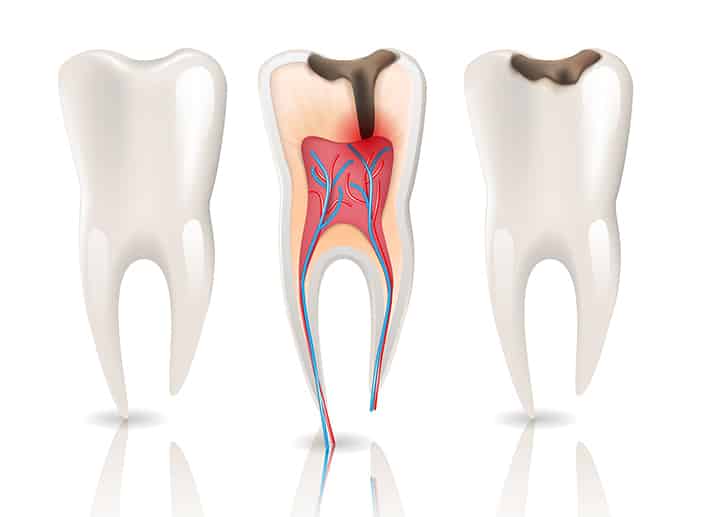
Inside every tooth, beneath the hard outer layers of enamel and dentine, is a chamber filled with soft tissue called the dental pulp. The pulp contains the tooth’s nerve fibres, blood vessels, and connective tissue. It extends from the crown of the tooth down through narrow channels (root canals) that exit at the tip of each root.
When the pulp becomes infected or irreversibly inflamed – usually due to deep decay, a crack, or trauma – root canal treatment is needed to save the tooth. The procedure involves:
- Accessing the pulp chamber through the top of the tooth
- Locating all root canals within the tooth (and there are often more than you would expect)
- Removing the infected or inflamed pulp tissue from the chamber and canals
- Cleaning and shaping the canals using specialised instruments to remove bacteria and debris
- Disinfecting the canal system with antimicrobial solutions
- Filling and sealing the canals with a biocompatible material to prevent reinfection
- Restoring the tooth with a filling or crown to protect it long-term
Each of these steps requires precision. But it is steps 2, 3, and 4 that most clearly distinguish specialist from generalist care.
The Microscope: Seeing What the Naked Eye Cannot
The single most important piece of technology in modern endodontics is the dental operating microscope.
Root canals are tiny. The main canals in a molar tooth are typically 0.5mm to 1mm in diameter at their widest point, narrowing to fractions of a millimetre near the root tip. Many teeth have additional canals that are even smaller – hidden behind ridges of dentine, branching off at odd angles, or concealed in recesses that are invisible to the naked eye.
General dentists typically work without magnification or with basic loupes (magnifying glasses that provide 2x to 4x magnification). Under these conditions, locating and treating the main canals is usually feasible, but finding hidden or accessory canals is often a matter of chance rather than certainty.
Endodontists work under dental operating microscopes that provide 8x to 25x magnification with powerful coaxial illumination. Under the microscope, the interior of a tooth is transformed from a dim, barely visible cavity into a brightly lit, highly detailed landscape. The endodontist can see:
- Extra canals that would be invisible without magnification
- Calcified (narrowed) canals that appear to be blocked
- Micro-cracks in the root structure
- Residual tissue or debris that has been missed
- The precise endpoint of each canal
This visibility translates directly into treatment quality. A canal that is not found, not cleaned, or not sealed will continue to harbour bacteria, leading to persistent infection and eventual treatment failure.
The numbers tell the story. Upper first molars, for example, typically have three roots. Most general dentists treat these teeth as having three canals. In reality, studies consistently show that over 90% of upper first molars have a fourth canal (the second mesiobuccal canal, or MB2).
Finding and treating this canal requires magnification and experience. Missing it is one of the most common causes of root canal failure.
Success Rates: The Numbers Matter
Root canal treatment is one of the most studied procedures in dentistry, and the research consistently shows a difference in outcomes based on who performs the treatment.
General dentist root canal success rates are typically reported in the range of 85% to 90% for initial treatments. This is a good success rate, and for straightforward cases (single-rooted teeth with uncomplicated anatomy), many general dentists achieve excellent results.
Endodontist success rates for initial root canal treatment are typically reported at 95% to 98%. The difference may seem small in percentage terms, but it is significant in practice: for every 100 teeth treated, the endodontist saves five to thirteen more teeth than the generalist.
For retreatments (root canals that have previously failed and need to be redone), the difference is more pronounced. Retreatments are technically demanding, often involving the removal of previous filling material, the location of missed canals, and the management of complications. Endodontists, with their microscopes, advanced instruments, and concentrated experience, are substantially more likely to achieve a successful outcome in these challenging cases.
When Your General Dentist Can Handle the Root Canal
Not every root canal needs a specialist. General dentists are trained in root canal treatment and perform it competently for many common scenarios:
Front teeth (incisors and canines). These teeth typically have a single, relatively straight canal. The anatomy is predictable, the access is straightforward, and the treatment is well within the scope of a skilled general dentist.
Premolars with uncomplicated anatomy. Many premolars have one or two canals with gentle curvature. When imaging confirms straightforward anatomy, general dentist treatment is often appropriate.
Patients with no complicating factors. When the tooth has a clear diagnosis, the canals are visible on X-ray, there is no history of previous treatment, and the patient has no medical conditions that complicate treatment, a general dentist root canal is a reasonable option.
Your general dentist should be comfortable discussing their experience level, their equipment, and their confidence with your specific case. A good general dentist knows when to refer – and is happy to do so.
When You Should See an Endodontist
Certain clinical scenarios clearly benefit from specialist care:
Molar teeth. Molars have complex root anatomy with three to four (or occasionally five) canals, significant curvature, and frequent anatomical variations. The MB2 canal in upper molars and the additional canals sometimes found in lower molars require microscope-assisted treatment for reliable identification and treatment.
Retreatments. If a previous root canal has failed – the tooth is symptomatic again, there is a persistent infection visible on X-ray, or a new infection has developed – retreatment is significantly more complex than initial treatment. The old filling material must be removed, missed canals must be found, and the canal system must be re-cleaned and re-sealed.
Calcified canals. Over time, root canals can become narrowed or completely blocked by calcification (a process where secondary dentine gradually fills the canal space). Locating and navigating these calcified canals requires microscope visualisation and specialised ultrasonic instruments.
Teeth with unusual anatomy. Some teeth have extra roots, extra canals, sharply curved roots, or internal resorption (where the tooth is dissolving from the inside). These variations require the diagnostic capability and treatment flexibility that specialist training provides.
Cracked teeth. Diagnosing and treating cracked teeth is one of endodontics’ greatest challenges. The crack may be visible only under the microscope, and determining whether the tooth is saveable requires specialist judgement and experience.
Surgical endodontics (apicoectomy). When root canal retreatment is not feasible, or when infection persists despite adequate root canal treatment, surgical intervention may be necessary. An apicoectomy involves accessing the root tip through the gum and bone, removing the infected tissue, and sealing the root end. This microsurgical procedure is squarely within the endodontist’s expertise.
Dental trauma. Teeth that have been knocked out, displaced, or fractured by trauma often need urgent endodontic assessment and treatment. The management of traumatic dental injuries is a core part of endodontic specialist training.
Medically complex patients. Patients on anticoagulant therapy, immunosuppressive medications, bisphosphonates, or those with significant medical conditions benefit from the additional training and caution that specialist care provides.
The Referral Pathway at Smile Solutions
Seamless referrals
Shared records and imaging
Coordinated treatment
Urgent access
At Smile Solutions, we have endodontists practising within our Collins Street clinic. This inhouse specialist access means. This multidisciplinary model – over 80 clinicians including more than 25 registered specialists under one roof – means you receive the right care from the right specialist without the fragmentation that comes from being referred between separate practices.
After Root Canal: What Comes Next
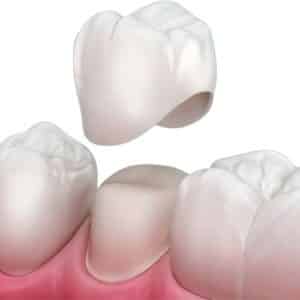
A root canal saves the tooth, but it also changes the tooth. Without its blood supply, the tooth becomes more brittle over time. For this reason, most root canal-treated teeth, particularly molars and premolars, need a dental crown to protect them from fracture.
The timing and type of crown depends on the specific case, but the principle is straightforward: a crown distributes biting forces across the entire tooth, protecting the weakened structure from cracking under normal function.
At Smile Solutions, the crown can be planned and placed by your general dentist or prosthodontist, often using the same digital scanning and design technology used for our cosmetic work. The transition from root canal to permanent restoration is coordinated seamlessly within the practice.
The Bottom Line
Root canal treatment is not something to dread. It is something to get right.
For straightforward cases on front teeth or simple premolars, your general dentist may be the perfect choice. For molars, retreatments, complex anatomy, or any case where you want the highest probability of success, an endodontist brings specialist training, advanced technology, and concentrated experience that measurably improve outcomes.
For straightforward cases on front teeth or simple premolars, your general dentist may be the perfect choice. For molars, retreatments, complex anatomy, or any case where you want the highest probability of success, an endodontist brings specialist training, advanced technology, and concentrated experience that measurably improve outcomes.
At Smile Solutions, you do not have to choose between convenience and specialist quality. Our in-house endodontists work alongside our general dentists, prosthodontists, and other specialists to ensure every root canal is performed to the highest standard.
Do you need a root canal?
If you have been told you need a root canal, or if you are experiencing tooth pain that might indicate the need for one book an appointment at Smile Solutions.