

Clear aligners have made orthodontic treatment more accessible than ever – but the person planning your case matters far more than the brand of aligner you choose.
Invisalign changed the public perception of orthodontics. Suddenly, straightening teeth did not mean two years of metal brackets and wires. It meant clear, removable aligners that were nearly invisible. And as the brand grew, so did the number of dental providers offering it. Today, you can get Invisalign from a specialist orthodontist, a general dentist, and in some markets, even through direct-to-consumer models with minimal clinical oversight.
But here is what the marketing does not tell you: the aligner is just a tool. A sophisticated, well-engineered tool, certainly – but a tool nonetheless. The quality of your result depends overwhelmingly on who is planning and managing your treatment. And when it comes to specialist orthodontist vs GP Invisalign, the difference in training, diagnostic ability, and case management capability is substantial.
This is not about criticising general dentists. Many are excellent clinicians who serve their patients well. But orthodontics is a recognised dental specialty for a reason, and understanding that reason will help you make a more informed decision about who should straighten your teeth.
What Makes a Specialist Orthodontist Different?
A specialist orthodontist is a dentist who has completed an additional three years of full-time, university-based training exclusively in orthodontics after finishing their dental degree. That is three years of doing nothing but studying how teeth move, how jaws grow, how bites function, and how to diagnose and treat the full spectrum of orthodontic problems.
This additional training includes:
- Retention and stability – understanding why teeth relapse after treatment and designing retention protocols to maintain results long-term.
- Cephalometric analysis – interpreting lateral skull radiographs to assess jaw relationships, growth patterns, and skeletal discrepancies that cannot be evaluated by looking at the teeth alone.
- Biomechanics of tooth movement – understanding at a deep level how forces applied to teeth create movement, including the physics of torque, tipping, bodily movement, rotation, and intrusion/extrusion.
- Growth and development – predicting how a child’s or adolescent’s jaws will grow and timing treatment to take advantage of or work around growth patterns.
- Complex malocclusion management – treating severe crowding, impacted teeth, open bites, deep bites, crossbites, and skeletal jaw discrepancies that require either surgical orthodontics or sophisticated mechanical strategies.
- Interdisciplinary case planning – coordinating orthodontic treatment with prosthodontic rehabilitation, periodontal surgery, orthognathic (jaw) surgery, and restorative dentistry.
Specialist orthodontists are registered with the Australian Health Practitioner Regulation Agency (AHPRA) as specialists and are typically members of the Australian Society of Orthodontists (ASO). In Australia, only a registered specialist orthodontist can legally call themselves an orthodontist.
A general dentist offering Invisalign, by contrast, has their standard dental degree (five years) plus whatever additional short courses or manufacturer-provided training they have completed.
Some general dentists invest heavily in continuing education and become very proficient with aligners. But even the most dedicated short course cannot replicate three years of full-time specialist training in orthodontic diagnosis and treatment planning.
Where the Difference Shows Up Clinically
The gap between specialist and generalist orthodontic care is not always obvious on simple cases. A mild crowding case in an adult with a healthy bite and no skeletal issues can often be managed well by either provider. The difference becomes apparent – and consequential – as case complexity increases.
1. Diagnosis and Treatment Planning
This is where the most significant difference lies, and it is the step patients see the least.
Before a single aligner is fabricated, someone needs to analyse your dental records, radiographs, and clinical findings to develop a treatment plan. This involves answering questions that go far beyond “which teeth need to move where”:
- Is there a skeletal component to this problem? If the upper jaw is too narrow or the lower jaw is positioned too far back, moving teeth alone will not fully correct the issue – and may create instability.
- Is there sufficient bone to move teeth in the desired direction? Aligner movements that push teeth outside the bone envelope (the available bone housing) can lead to gum recession, root exposure, and long-term periodontal problems.
- What is the root morphology? Short roots, dilacerated roots (roots with unusual curvature), or roots in close proximity to anatomical structures require modified treatment approaches.
- Is there a TMJ (jaw joint) issue? Patients with temporomandibular dysfunction need orthodontic treatment planned with their joint condition in mind. Ignoring this can make their symptoms worse.
- What is the long-term prognosis of each tooth? An orthodontic plan that relies on a tooth with a large existing restoration, a failing root canal, or compromised periodontal support may be setting up for failure.
A specialist orthodontist evaluates all of these factors as a matter of course. Their training has wired them to see the whole system – teeth, bone, gums, joints, and facial structure – rather than focusing narrowly on alignment.
2. Aligner Prescription and Staging
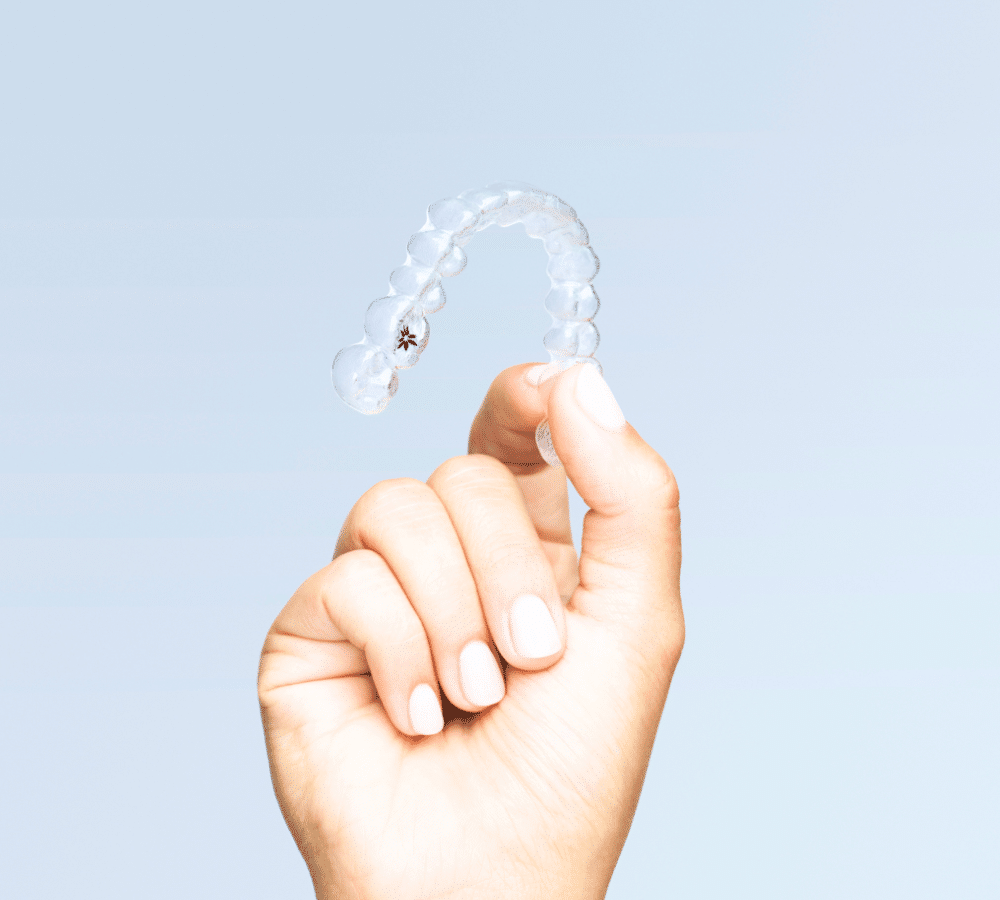
When a dentist submits a case to Invisalign (or any aligner company), the software generates a proposed treatment plan – the ClinCheck in Invisalign’s system. This is not a treatment plan in the clinical sense. It is a computer-generated simulation of tooth movements that the prescribing clinician is expected to review, modify, and refine.
This is a critical distinction. The software does not know about your bone levels, your root anatomy, your TMJ health, or the limitations of aligner mechanics. It proposes movements based on algorithms. The clinician’s job is to evaluate those proposals and modify them to reflect clinical reality.
A specialist orthodontist reviewing a ClinCheck will routinely:
- Limit movements that exceed predictable aligner mechanics – certain tooth movements (notably root torque, bodily movement of canines, and significant intrusion) are less predictable with aligners, and an orthodontist knows when to add auxiliaries, modify staging, or switch to fixed appliances.
- Add strategic attachments – the small tooth-coloured bumps bonded to teeth that give aligners grip. The placement, shape, and number of attachments significantly affect treatment predictability, and an orthodontist’s understanding of biomechanics drives better attachment design.
- Stage movements appropriately – sequencing which teeth move first, incorporating overcorrections where needed, and building in passive aligners to allow bone remodelling.
- Plan for finishing – the final 10-20 per cent of orthodontic treatment is where the difference between good and excellent results becomes apparent. An orthodontist’s eye for detail in occlusal contacts, root parallelism, and interdigitation produces superior finishing.
3. Managing Complications and Mid-Course Corrections
No orthodontic treatment goes exactly to plan. Teeth that track poorly, unexpected anchorage loss, aligner fit issues, and patient compliance variations all require clinical judgement and mid-course corrections.
A specialist orthodontist has the training and experience to:
- Recognise when teeth are not tracking as planned and intervene early.
- Use auxiliaries such as elastics, buttons, power ridges, or even temporary fixed appliances to recover lost movements.
- Know when to stop aligner treatment and transition to fixed braces to achieve movements that aligners cannot predictably deliver.
- Manage orthodontic emergencies (though these are less common with aligners than with braces).
A general dentist who encounters a tracking problem may not have the diagnostic tools or biomechanical understanding to identify the root cause and implement an effective solution. The risk is that the problem compounds over subsequent aligners, leading to a result that falls short of what was planned.
4. Bite Correction, Not Just Alignment
Perhaps the most consequential difference is in the management of the bite (occlusion). Many patients – and some general dentists – think of orthodontics primarily as tooth alignment: making the front teeth straight and even. But alignment is only one component of orthodontic treatment.
A properly finished orthodontic case should achieve:
- Class I molar and canine relationships – the back teeth fitting together in their ideal positions.
- Proper overbite and overjet – the upper front teeth overlapping the lower front teeth by the right amount, both vertically and horizontally.
- Functional occlusion – teeth that come together evenly during chewing, with appropriate guidance patterns during jaw movements.
- Root parallelism – the roots of adjacent teeth positioned parallel to each other, not converging or diverging in ways that compromise periodontal health.
Getting alignment right is relatively straightforward with modern aligners. Getting the bite right is where orthodontic expertise becomes indispensable. A case that finishes with straight-looking front teeth but a compromised bite may develop premature wear, TMJ symptoms, or instability that leads to relapse.
The Invisalign Provider Tier System
Invisalign categorises its providers into tiers based on case volume: Silver, Gold, Platinum, Diamond, and so on. These tiers are often used in marketing to suggest expertise, but they reflect quantity of cases started, not quality of outcomes. A high-volume provider is not necessarily a skilled provider – they may simply be starting more cases.
This is worth understanding because some patients choose their provider based on Invisalign tier level, assuming that a Diamond provider must be better than a Gold provider. In reality, a specialist orthodontist at any tier level brings fundamentally superior diagnostic and treatment planning capabilities compared to a general dentist at a higher tier.
When You Absolutely Need a Specialist Orthodontist
There are cases where seeing a specialist orthodontist is not optional – it is essential:
- Moderate to severe crowding requiring extractions.
- Crossbites (anterior or posterior).
- Open bites or deep bites.
- Class II or Class III skeletal relationships.
- Impacted teeth requiring exposure and alignment.
- Orthodontics as part of multidisciplinary treatment (implants, jaw surgery, complex restorative work).
- Growing children and adolescents where growth modification is indicated.
- Cases with TMJ symptoms or history.
- Significant asymmetry.
- Any case where the patient is not satisfied with a result from a previous provider.

Dr Joshua Ch’ng (DEN0001857728) – Registered Dentist, Specialist, Specialist Registration in Orthodontics
The Smile Solutions Advantage
At Smile Solutions, our specialist orthodontists work within a team of over 25 dental specialists and more than 80 clinicians at our Melbourne CBD practice. This means that when an orthodontic case has complexities that extend beyond tooth alignment – a missing tooth that needs an implant, gum recession that needs grafting, a jaw discrepancy that might benefit from surgery – the orthodontist can consult with the relevant specialist down the corridor.
Our orthodontists offer both Invisalign and traditional fixed braces, and they recommend the system that will deliver the best result for each individual case. They are not locked into one product because they only offer one product. They choose the right tool for the job based on clinical evidence and experience.
This is the question to ask yourself: do you want the person managing the movement of every tooth in your mouth to have three years of full-time specialist training in exactly that, or are you comfortable with someone who has taken a weekend course? For simple cases, the answer might not matter much. For anything more complex, it matters enormously.